Visited by millions, full of tropical beaches and diverse landscapes, a country of rich culture and delicious, unmistakable cuisine. – that’s Thailand. Actually, the Kingdom of Thailand, previously known as Siam, is the travel hub of South East Asia and often the first country on many Asian bucket lists. It’s easy to travel, safe, fairly inexpensive and thanks to the friendly locals you will feel at home.

Disclaimer: This page contains affiliate links, If you click one of them I will earn a small commission, it won’t cost you anything extra.
Yet, there are still a few thing that you should know when planning a trip to “the Land of smiles”. When to go, where to visit, what to pack and what is a must do. These and many other questions will be answered in this blog post. And after spending more than 10 months there, I know all the answers and I can promise you, that this will be the only: “Thailand useful things to know” guide you’ll ever have to read.
So no matter if you’re planning just a short stay or you want to spend a few weeks exploring this cool country, sit back, relax and keep reading to discover:
all the useful things to know before visiting Thailand.

Let’s start with the most obvious one:
When should I travel to Thailand?
To quickly answer you question: from November to February. But those will also be the busiest and most expensive months.
Being located not far from the equator, Thailand has 3 seasons: hot (March to May), cool (November to February) and wet (May to October). But the weather also differs depending on the part of the country you’re currently in.
The more north you go, the cooler it gets. In the northernmost regions of Thailand it even gets cold at night.
Weirdly, I experienced the hottest and most unpleasant conditions in Bangkok – the capital. Probably because of all the concrete and skyscrapers that are absorbing and reflecting heat. But I wouldn’t say it ever gets extremely hot there. The heat is kind of consistent and you can easily get used to it.

When to avoid travelling to Thailand?
Chiang Mai and the north part of the country should be avoided from February until April. There is burning season happening there and the air quality is very poor. Many locals take this time to leave the region and go on holidays to escape the smoke.
Krabi, Koh Phi Phi, Phuket, Koh Lanta and other Islands in the Andaman Sea, due to heavy rain should be avoided from May to October. I experienced super heavy rain in Koh Phi Phi. Trust me, it was like the world was ending.
Gulf Islands (Koh Tao, Koh Chang, Phang Nga, Koh Samui) are better to avoid in October and November. Also due to heavy rainfall.

Do I need a visa?
No.
Most Western countries get a stamp in their passports upon arrival that permits them to stay up to 30 days.
You do need a passport that is valid for at least another 6 months upon entry into Thailand though.
Just FYI, overstaying your visa/permit can be really expensive, so don’t do that.
Super useful thing to know about thailand!
Finding information about…everything really: from official rules to travel tips on visiting certain places in Thailand can be difficult and stressful. Sometimes information is very misleading, vague, out of date or is simply not there at all! So stick to updated blogs (like this one), look for facebook Groups or use other social media, like Instagram to ask questions to people who have recently been there.

Do I need a shot?
Not really. No vaccinations are required to enter Thailand. From October 2022, not even C***d. But it is recommended to be vaccinated for Hepatitis A+B and rabies.
Scared of malaria? Don’t be!
In Thai urban areas and popular tourist destinations there is no risk of malaria transmission.
Healthcare TIP
In general, the Thai healthcare system is one of the best in the world, so if anything happens (knock on wood), I’m sure you’ll receive proper care. Another useful thing to know when going to Thailand is that prices for treatments can be pretty steep, so don’t forget to buy insurance. I recommend Nomad Insurance by SafetyWing that covers all the medical expenses while travelling, including injuries from sport activities and motor accidents.

What currency will I be using?
Thai Baht.
It converts to (2022):
£1 – 45 baht
1€ – 37 baht
$1 – 32 baht.
Thai Baht is a pretty stable currency. Very easy to learn and use. And you kind of have to learn it, because it’s still better to use cash here. A lot of places don’t accept international credit/debit cards. And even if they do, you might be charged 3% of transaction fee.
Luckily ATMs can be found almost everywhere, but most banks charge 250 baht commission for every withdrawal, no matter the amount. So if you’re withdrawing money, make it a larger amount.
Useful tip!
A card I recommend for all travellers is Wise (formally known as TransferWise).
In many countries you can withdraw your money fee-free and the Wise App is super easy to use. Even I can do it. It allows you to exchange between currencies super fast (it literally takes a few seconds). Wise always uses the mid market rate and charges very low fees. It’s the best and the only travel card you’re even going to need!
Get your Wise now!
Do I need to learn Thai?
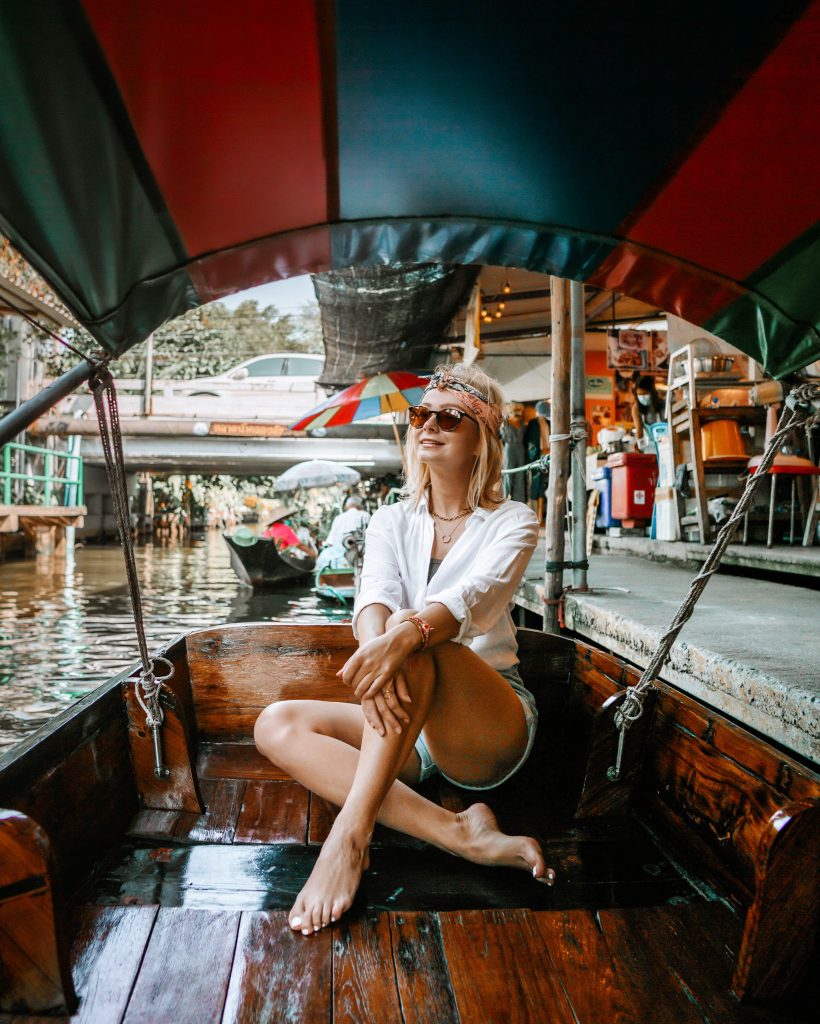
Since Thailand is a touristy country, English is widely spoken. Well, I call it Thai-English, because sometimes it’s really hard to understand what Thai people mean. Surprisingly, the biggest difficulties I encountered in Bangkok. But even there with Google translator and some “sign language”, you can always come to an understanding.
There are a few useful phrases that you can learn to gain a few points among Thais:
Hello = sa-wat-dee ka (female) | sa-wat-dee kap (male)
Thank yo: kop-koon ka (female) | kop-koon kap (male)
Delicious: a-roy
How much?: nee gee baht?
Too expensive: feng-mak-pie
And if you’re vegan/vegetarian:
I’m vegan: chan gin jey kaa/krab
I am vegetarian: chan gin mangsawerat kaa/krab.
If you do want to learn more Thai though, try Ling App. It’s one of two apps out there that allows you to learn Thai language. I won’t lie to you, Thai is hard. But thanks to Ling App, I already know the names of the fruits and vegetables and I’ve learnt the numbers, so can haggle prices like a true Thai.
Funny note
Whenever I tried to speak Thai or pronounce the names of bus stops, even simple sounding ones, Thai people just looked at me blankly. Sometimes it took 3 or 4 times for them to get what I mean. It’s all about inflection.
Ok, but where should I even visit?
Well, that’s definitely a very useful thing to know when planning your trip to Thailand, isn’t it?
When you think of Thailand, you probably imagine sandy beaches, palm trees, longtail boats and in general – paradise islands. And while staying on a Thai island is a must, this country has much more to offer.
Go to the South if you’re dreaming of cocktails under a palm tree. The most popular islands are:
- Phuket – the biggest and the busiest;
- Koh Samui – yoga retreats, honeymoons and full moon parties;
- Phi Phi Islands – white sand beaches and small island vibes;
- Koh Pha Ngan – if beach parties are your thing;
- Koh Tao – perfect for diving and snorkelling.
Go to the North if you’re more into into mountains, jungles and big city vibes. The best places to visit are:
- Krabi – a good combo of beach vibes and jungle hikes;
- Bangkok – the capital city! It’s big, it’s bustling, but also a bit tiring;
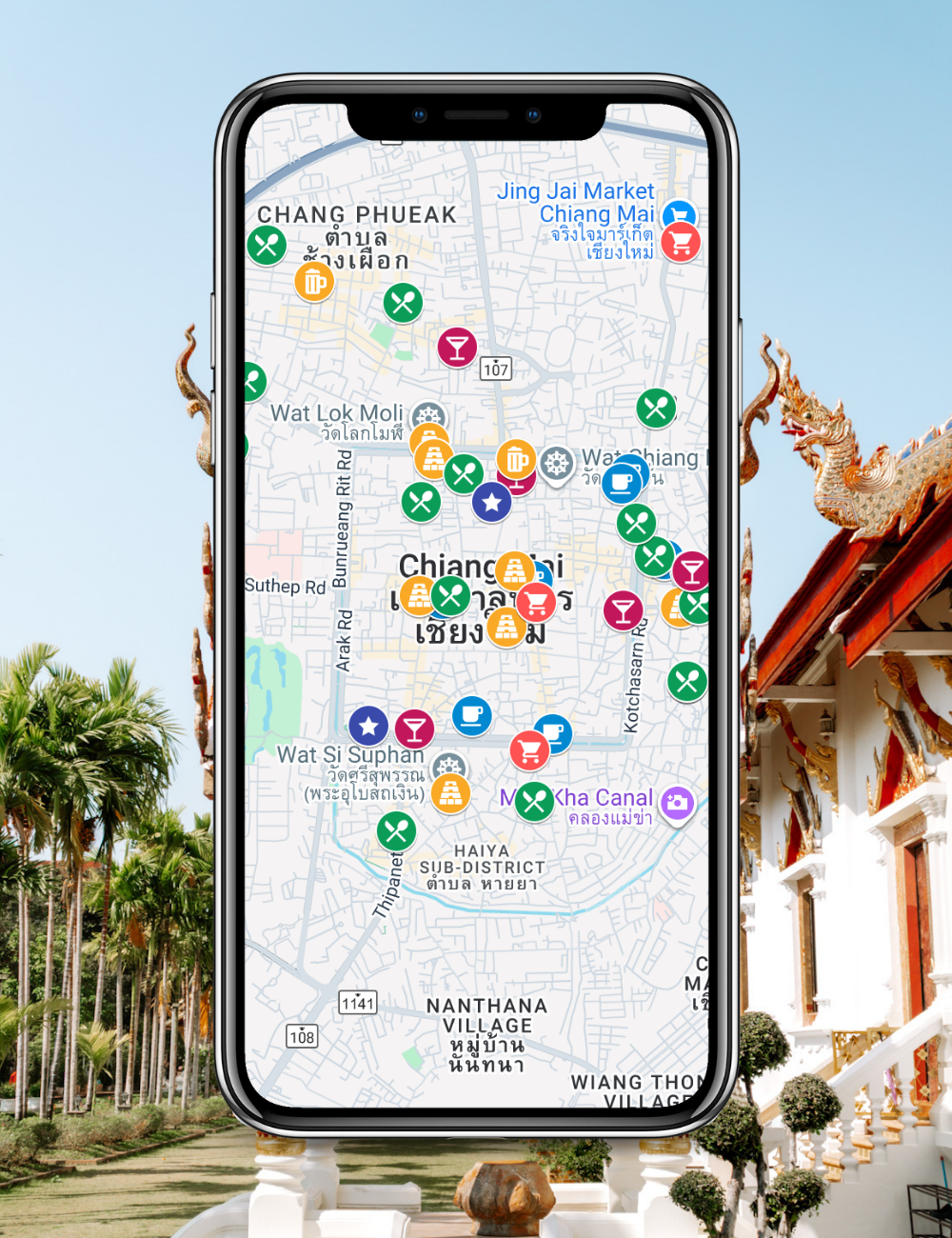
- Chiang Mai – country’s cultural hub, known for its great food and coffee and as a digital nomad hub.
It’s packed with my favourite temples, markets, cafés and local gems – all neatly pinned and ready to use!
- Pai – perfect for hippies and nature lovers.

How do I get around?
Thailand has a wealth of public transport options, from the almost luxurious to the definitely not for the faint of heart, with prices to match each. I tried all of these options, so let’s dive in.
The most popular and the cheapest mean of transport to travel around Thailand are:
Coaches
Coaches offer large variety in comfort. My favourite coach trip was with this Super VIP 20 seater coach, that looks like spaceship. Check out how to book it! I can tell you that the extra comfort does make a difference when taking a 10 hour journey. Especially overnight, which is always a good choice.
The most popular routes that the coaches cover are:
Bangkok <-> Chiang Mai
Bangkok <-> Krabi
Bangkok <-> Phuket
Flying
There are a few international and regional airports in Thailand, including Bangkok, Phuket, Chiang Mai, Koh Samui, Surat Thani which makes flying the fastest way of travelling inside of Thailand. You also have quite a big choice regarding the airlines: Air Asia, Bangkok Airways, Thai Smile, Nok Air and Thai Airways. When booked in advance prices can be real cheap.
Trains
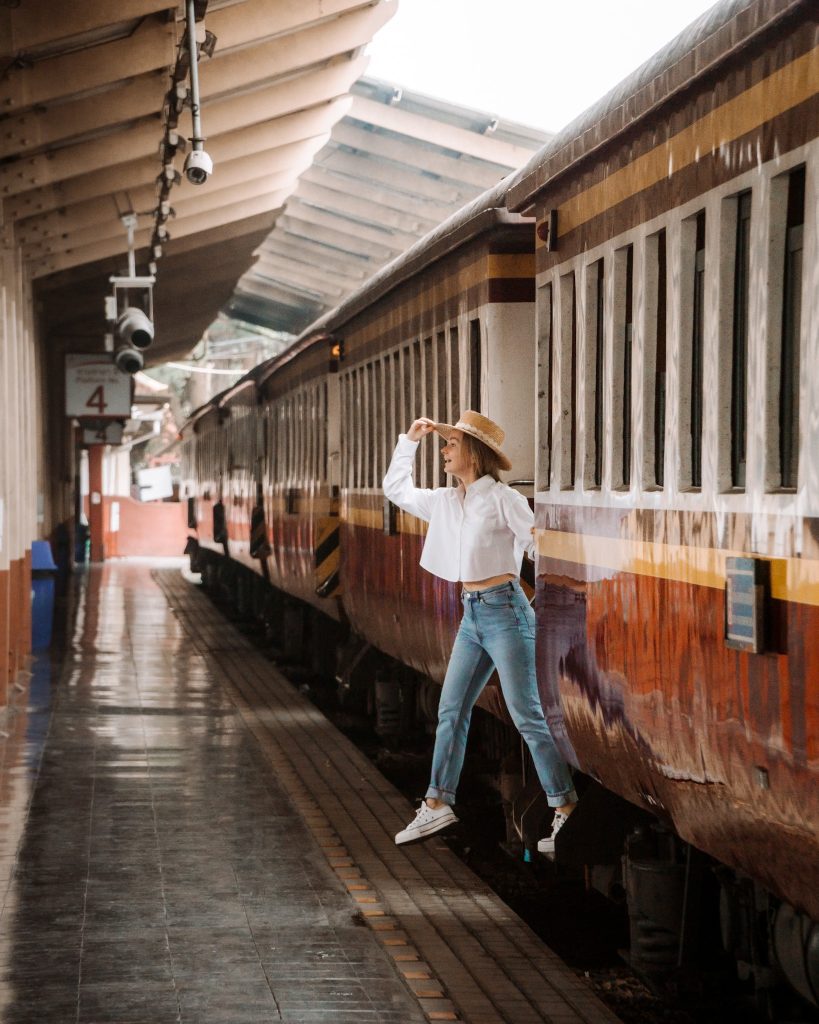
Trains are cheap, but kinda slow. Sometimes even slower than coaches, especially for longer routes. But for shorter routes they work perfectly. The great thing is, that you can travel quite comfortably if you book the first or second class, which includes a sleeping option. But first and second class you have to book in advance. Third class can get very busy – standing through the whole journey is not uncommon.
The most popular routes that the trains cover are:
Bangkok <-> Chiang Mai
Bangkok <-> Surat Thani
Read my full guide on booking a sleeper train from Bangkok to Chiang Mai! Riding this night special train is a really cool experience and with my instructions you’ll be able to book it and get the tickets within minutes! I recently managed to book first class too! Find out how I did it!
Scooters
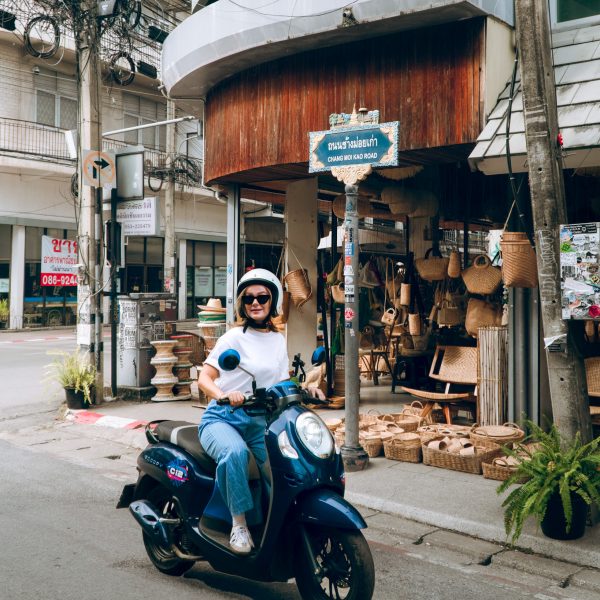
For the brave? Not necessarily. Yes, traffic in Thailand is crazy and in the beginning scooting might seem a bit scary, but in Phuket or Chiang Mai for example it was quite chilled and it definitely made our lives easier. Just make sure you have an international drivers permit (with a scooter stamp!), always get a helmet and never leave your passport as a deposit.
Read my blog post to find out how to drive a scooter in Thailand legally and what kind of driver’s permit you need. Because yes, you do need one!
Ferry/Longtail Boat
There are some destinations that you can only reach via ferry, like Koh Phi Phi or via longtail boat, like Railay Beach in Krabi. While ferries are rather inexpensive, longtail boats can be a bit pricey, especially if you’re thinking of a private tour. But hey, going to Thailand and not taking a longtail boat is like going to Paris not visiting the Eiffel Tower. It’s kind of a must!

How do I get around in the cities?
Songthaews
Songthaews are converted pickup trucks with two covered benches running along each side. Some have set routes, others work similar to taxis. They’re cheap and give you a good view as you drive around. You just tell the driver where you want to go, and if there are other passengers he takes you all on the best route possible. While it may not be the quickest or shortest route, you pay the same price regardless. Songthaews are the most popular in Phuket, Krabi, Chiang Mai and Chiang Rai.
BTS/Metro
No, not the Korean boyband. BTS is the elevated rapid transit system in Bangkok, which serves some of the main parts of the city. It’s great because you avoid all the traffic below, but it’s not the cheapest option and doesn’t cover many parts of the city. The Underground Metro covers some of the older parts of the city, but it is seemed more aimed at commuters than tourists.
Read my full guide on getting around Bangkok. I listed pros and cons of all means of transportation, so you’d know how to avoid infamous Bangkok traffic.
Taxis, Tuk Tuk, Grab
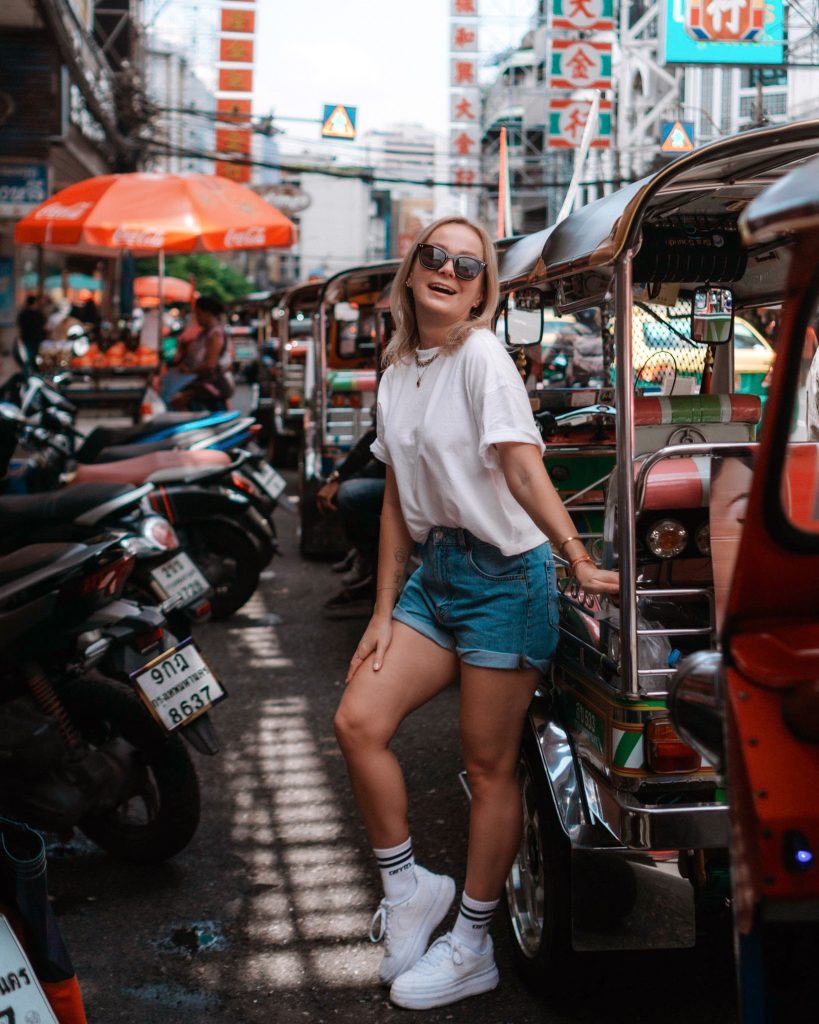
Inside cities, these are relatively cheap options to get around. Taxis, believe it or not, are probably the cheapest. Grab (Asian Uber) is the most convenient since you can pre-order it. And Tuk Tuks are probably the most fun, but not cheap. Plus after a few rides you might get sick of the drivers trying to get your business by any means necessary.
Buses
Bangkok has a huge variety of public buses: old ones with open windows, ones with fans and completely covered in aluminium and modern air conditioned ones. They all have different prices, but no matter what you pay, you can be sure that it’s the cheapest means of transport. You buy tickets onboard from conductors who usually don’t speak English, so learn the names of the places you want to go, or get the Thai name up on Google. We even had friendly locals tell the conductor what we were trying to say. I honestly lost count of the number of ways I tried to pronounce “Sanam Pao” which was our nearest station in Bangkok.

Do I need to watch what I wear?
If you’re talking about religious places, because I sneaked in this topic under this slightly confusing title – the answer is yes – you will need to dress appropriately. One of the useful things to know about Thailand is, it’s a 95% Buddhist country and when entering the temples or sometimes even the grounds of the temples your shoulders and knees must be covered. No matter if you’re a boy or a girl. But if you are a girl, it’s most likely you who will be shouted at for not dressing accordingly. Just a little sexist, but based on real events.

Will I be safe when travelling in Thailand?
Another quick answer: yes, you’ll be safe. During my almost 10 months in Thailand there was no single situation when I felt unsafe. Yes, you have to be aware of your surroundings, because minor thefts happen like in every country. And there are some districts in Bangkok where I wouldn’t wander even by day, but apart from that Thailand is a pretty safe country.
Will I make friends?
Let’s just start by saying, that Thai people are very friendly and polite. Everywhere you go, strangers greet you with a smile and a Sawasdee ka. But in my experience they are still quite reserved around foreigners, so while you can make a little small talk, you’re often left alone. And when you’re out at a bar, Thai’s seem to keep to their own cliques. So unless you’re an outgoing person who likes to approach people, don’t expect to be invited into their group.

Can I drink tap water?
Short answer, no. Not straight from the tap anyway, it’s perfectly fine to boil it for hot drinks or for instant noodles, but when it comes to everyday drinking water, everyone drinks bottled. It’s easy to get from any supermarket and I always buy the biggest one possible to use the least amount of plastic possible. I also have a filter bottle that allows you to fill up from taps and even mountain streams and drink clean water.
Get WaterWell bottle now to save tons of plastic and money!

USEFUL INFO
Tap water in Bangkok is supposedly drinkable. I never drank it, mainly because I found out about it after we left, but also I’m not sure if I would. It’s totally up to you.
Useful mindful tip
When buying bottled water, make sure to get a big 5 litre one instead of a few smaller bottles. Every plastic bottle you don’t buy, helps!

What should I pack?
As little as possible – that’s what my boyfriend would say, because we highly overpacked. But the truth is, that you really don’t need much. Since Thailand is a tropical country, the weather will most likely be hot and sunny everyday, with some occasional rain from time to time. Unless you travel there during wet season.
To keep this “useful things to know about Thailand” guide short(er), I’ll skip the obvious parts of your wardrobe like shorts, t-shirts, dresses and so on. Just make sure that all the clothes are loose and breathable. Polyester and wool are a big no no!
So what are the things you can’t go without?
- bikinis/swimwear – at least 2 pairs;
- a hat or a cap or something to cover your head with;
- sunglasses;
- long sleeve cotton or linen shirts – ok, I’ll mention one piece of the wardrobe, because baggy shirts were my biggest discovery during this trip. Bring at least 2 or 3. They’re easy to take off when you’re hot and put on when you get chilly (in the malls or in airconditioned buses). They protect from the sun and are super useful when visiting the temples. And speaking of covering yourself in temples:
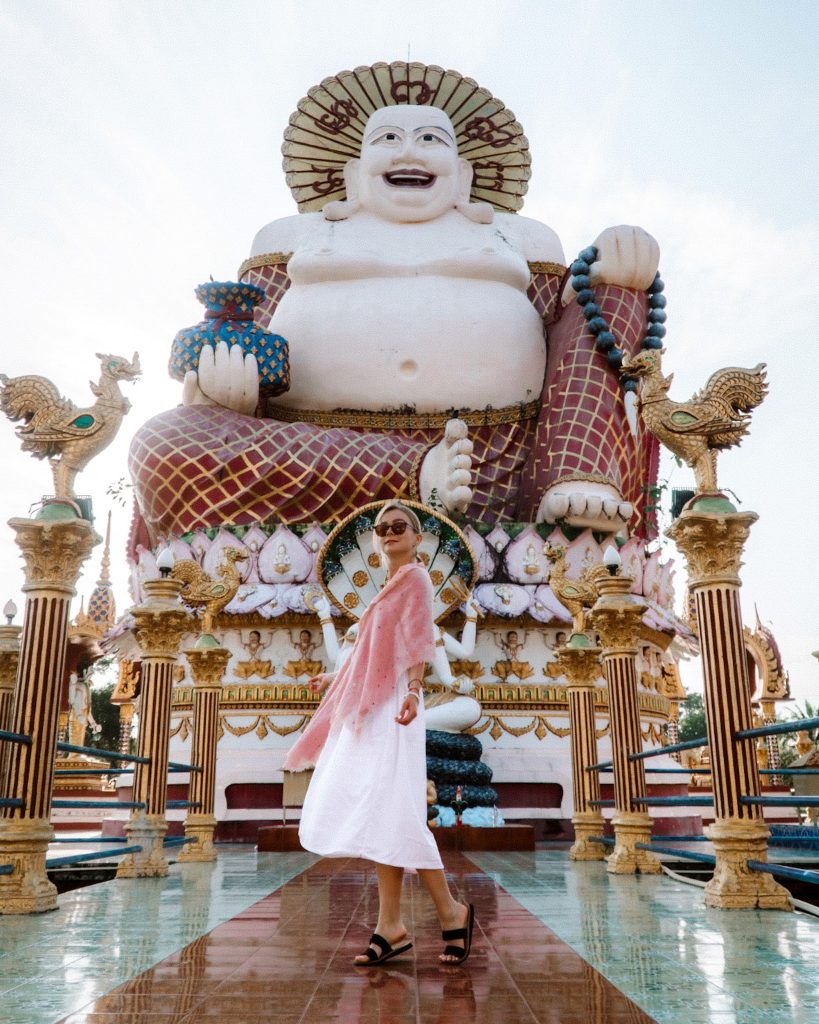
- a scarf or a sarong – trust me, you’ll need them;
- one hoodie/jumper/jacket – you’ll find them useful in the northern part of Thailand when the temperature is a bit lower;
- waterproof jacket;
- flip flops, sandals;
- comfortable shoes – necessary for hiking trips or longer walks. Converse or comfy sneakers will be enough;
- reef safe sunblock – always, I repeat ALWAYS have it on. Even if it’s cloudy;
- aloe vera or after sun lotion – even if you think you protect yourself from the sun, there will be at least one time, when you’ll get sunburnt. Trust me;
- mosquito repellant – it’s easy to buy in Thailand, but if you want to opt for some skin safer option, buy it in advance;
- waterproof bag – again, easy to buy in Thailand, but perhaps you can get it for cheaper where you live. And if you’re thinking of boat trips or kayak trips, you’ll absolutely need it;
- travel adapter – the most common plug socket in Thailand is a mix of European 2 pin and US 2 pin style. European plugs fit and work straight away, but Americans be warned: it operates at 230V so even though American plugs will fit in you’ll need an adapter to reduce the voltage;
- power bank;
- little backpack and/or bumbag for daily trips;
- quick drying towel;
- some basic medicine like ibuprofen, paracetamol, something for belly problems or sea sickness.
Important
- passport copies;
- a few passport photos (just in case)
- international driving permit – if you’re thinking of renting a scooter or a car it’s a must;

What other essentials should I bring?
Unfortunately there are a lot of environmental issues in Thailand that are still not resolved and not taken care of and you as a tourist will (knowingly or not) contribute to. Apart from exploitation of animals, single plastic usage was something that terrified me the most. The straws, the cups, food containers, tons of plastic bags and single use water bottles. When doing shopping on the food market you literally have to scream 2 or 3 times: no bag! And you have to do it fast, because in the blink of an eye you’ll be given one.

So bringing the products from the list below is probably the most useful thing to know before coming to Thailand. And as a mindful tourist you have to add these items to your packing list:
- water bottle with filter;
- reusable cutlery;
- reusable straws;
- lunch boxes/food containers if you’re planning on eating at food markets – and I’m sure you will!
- tote bags.
These are absolute musts!
Find out more about eco-friendly travel from my guide. Sustainable travelling is not that hard!

Uff, you made it! Those are the most useful things to know about Thailand before travelling to this fascinating country. I’m more than sure that you’re going to have a wonderful time.
If you want to know more about Thailand, check out my other blog post about quirky and interesting facts to know about this country. They might surprise you!
If you want to go straight from Thailand to Malaysia, check out my “Useful Malaysia travel tips” blog post and plan your perfect 2 weeks in this great country.
If you have any questions, post them in the comments or hit me up on Instagram.
Hi, it’s Aga, the author of this blog. If you found this blog post interesting, entertaining or useful, please think of buying me a virtual coffee to support the site’s running costs. But if you know me, I might actually spend it on coffee 🙂 Thanks!
Pin for later!



Great article, Aga! And loads of useful information, so saving it ❤️
Thank you so much! Happy you found it useful!
Wow Yiu weren’t lying this is actually the only blog anyone has to read before going to Thailand!!!!
Hhaha I never lie…ok, sometimes 😉 but happy you think so! 🙂
Nice and easy even for me 😉 and of course I find it very useful. 🙂
I read with a cup of oolong tea from you 😊 It was delicious! 🥰
awww to supcio! and thank you for reading! to juz wiesz jak sie przygotowac na podroz do Tajlandii 😉
Aga!! I really enjoyed reading this – tonnes of actually useful info
Thank you so much Eva! 🙂 happy you think so!
thank you for this information . i will go to there soon
osamh
from Riyadh , saudi
Great! Enjoy!
thanks for this, it was so helpfullll
Happy you found it useful! Enjoy Thailand!
Any recommendations for a local sim card to purchase upon arrival at Bangkok (BKK)?
AIS! I’ve always used them. Great connectivity and unlimited internet.
Great information, Aga! As a frequent traveler to Thailand (5 times so far, with another coming up this November), I’ll add that the cash you bring in your home currency should be as fresh and crisp as possible — no tears, not worn or dirty, and not all folded. I’ve had many a bill rejected at exchanges because they weren’t pristine enough. I’ll also add that the exchange rate (at least for American dollars) is a bit better the larger the bill. I bring $100’s, as new as possible, and no longer have had any issues. If I think of anything else useful, I’ll let you know 😉 Thanks again!
Robert
Thanks for this valuable input 🙂
such a beautiful article and helpful information thank you so much!!
keep going!!!
thank you so much! 🙂