I had never skied in my life. Not as a kid, not on a winter school trip…never! So I decided to start January 2026 by finally ticking it off my list. Life’s too short to not try new things, right? And since I live in Thailand, escaping to actual winter in Japan and skiing in Hakuba for the first time felt like the best way to do it. Plus, Japan is always worth visiting.
Disclaimer: This page contains affiliate links, If you click one of them I will earn a small commission, it won’t cost you anything extra.
I know what you might be thinking: if she’s never skied before, why should I even read this? What could she possibly know about skiing in Hakuba?
But that’s exactly why you should read this blog post. Because I started from absolute zero, I had to research everything: how it works, where to book, what to rent – all of it. And then I actually went and did it.
So no, I might not be the person to tell you when the snow conditions are at their peak or which slope has the dreamiest powder. But I can tell you how to organise the whole trip and what skiing in Hakuba for the first time actually feels like, especially when you’re not a pro.
I can also tell you how to visit Snow Monkey Park! Check out my full Snow Monkey Park guide to discover everything you need to know, including whether it’s actually worth the trip.
So if you’re planning on skiing in Hakuba for the first time and you’re slightly overwhelmed by the logistics – this (very detailed – sorry about that) guide is for you.
I’ll cover how to get there, when to go, where to rent equipment, how ski lessons work, what it all costs (spoiler: not cheap), and how to prepare if it’s your first time skiing. This isn’t a corporate resort overview, it’s my honest experience figuring it out as I went.
And if I could do it, you absolutely can too.
Ready to go skiing? Let’s go!
Skiing in Hakuba for the first time – everything you need to know
I should probably start with some basics:
1. Where is Hakuba and why is it famous?
Hakuba is located in Nagano Prefecture, in the Japanese Alps, about 3-4 hours from Tokyo, depending on how smoothly you manage your train-and-bus combo (more about that later) and how confident you feel dragging luggage through Japanese stations. It’s famous for hosting events during the 1998 Winter Olympics, which is already a solid flex, but these days most people talk about it for one reason: the snow. The powder in this part of Japan has a bit of a legendary status. Hakuba’s popularity probably also has a lot to do with how close it is to Tokyo. If you really really wanted, you could even go there for a day trip.
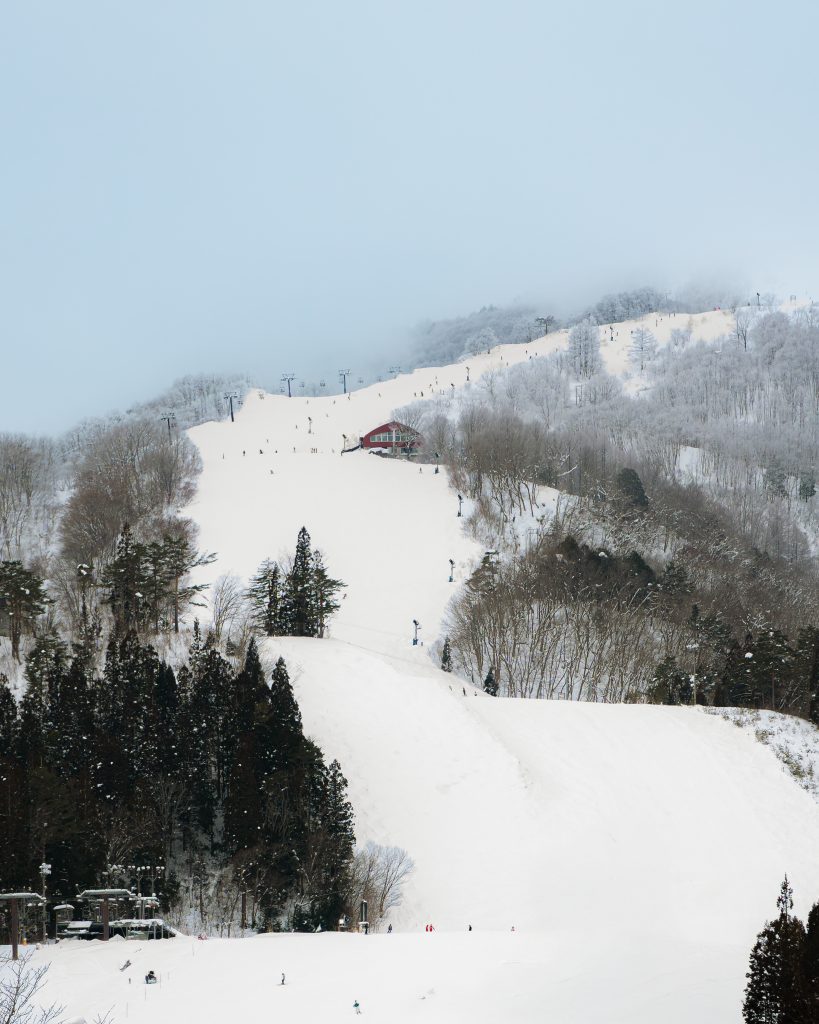
Hakuba itself is a small mountain village, but when people talk about skiing there, they don’t mean one single resort. The whole valley is home to multiple ski resorts, like Happo-One, Goryu, Hakuba 47, Iwatake and others. All connected by shuttle buses and lift passes, so it’s more of a ski area network than just one slope.
And after a freezing day on the mountain, there’s another very important Japanese invention waiting for you there: onsens. Hot springs, snow outside, steam rising… honestly, that alone almost makes skiing worth it!
My personal note:
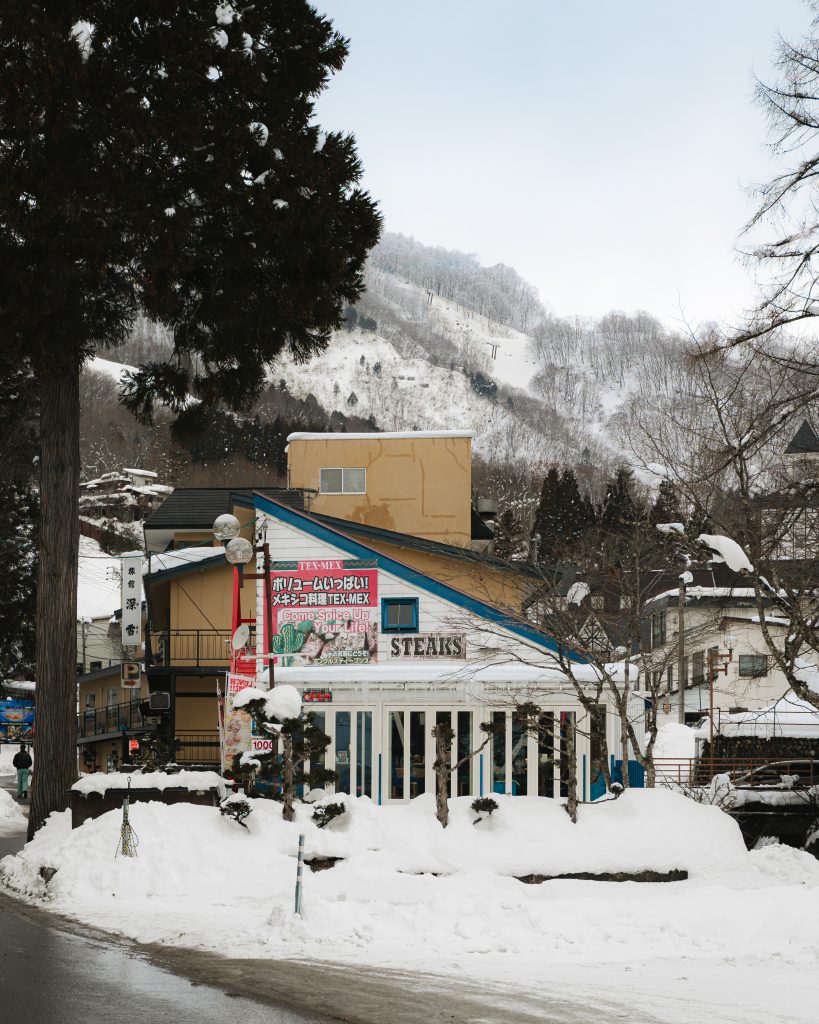
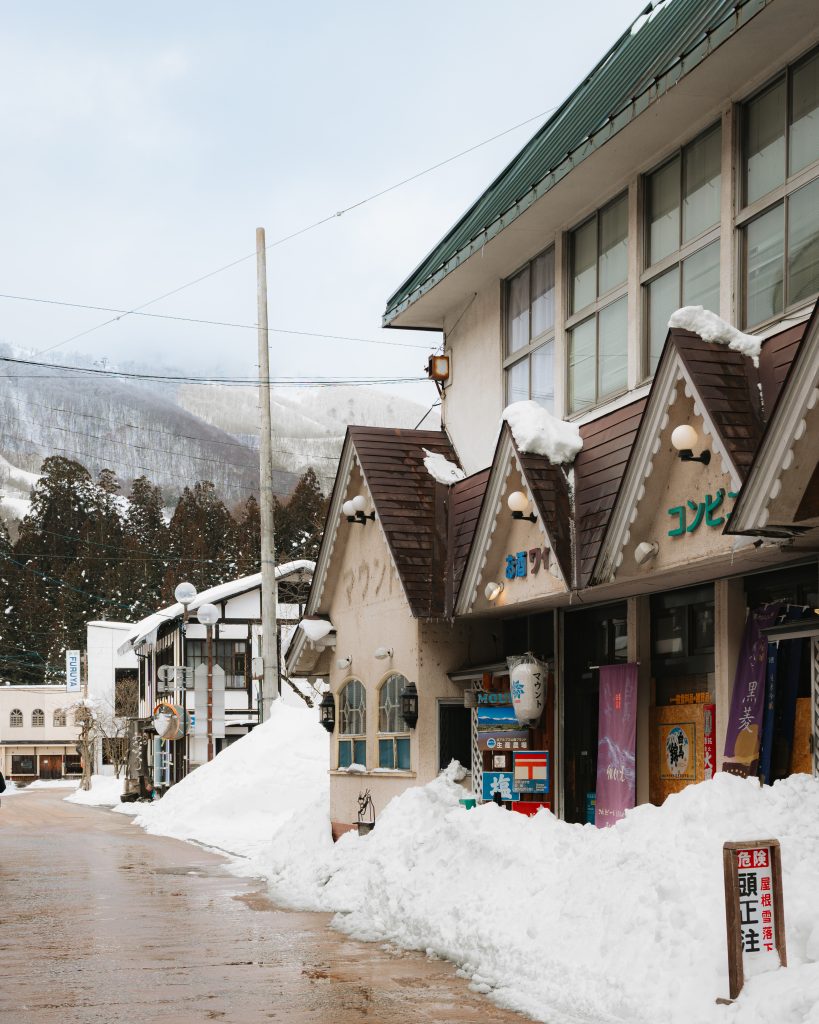
As a European, I’m used to a very specific image of a ski town: wooden chalets, fairy-light balconies, dramatic mountain backdrops, the whole Switzerland-meets-Christmas-market aesthetic. Even Zakopane in Poland (my country-placement here) has that cosy, wooden, mountain vibe that just looks like winter. Hakuba though is… perfectly fine. It works. It has everything you need. But I wouldn’t call it “cute”. I mean, sure, there are cute buildings – and let’s be honest, almost anything looks charming when it’s covered in snow. But overall, the vibe felt more practical than picturesque. It’s not a bad thing, just saying.
2. How to get to Hakuba?
The most common way to get to Hakuba from Tokyo is by taking a Shinkansen (bullet train) to Nagano and then a bus or coach from Nagano Station into the Hakuba valley. In theory, it sounds simple. In reality, it can get messy, especially if it’s your first time in Japan. So hear me out.
By train and bus combo
Narita Airport to Hakuba
I travelled from Narita Airport, so my route looked like this: Skyliner to Keisei Ueno Station, then the Shinkansen to Nagano, and finally a coach from Nagano Station to Hakuba (from platform 26 – but do check that before you board!). You have to buy the bus ticket at the station before boarding – there will be signs everywhere. The ride from Nagano to Hakuba takes about 90 minutes. To make it more clear, this was my journey:
Nartia Airport Terminal (1 or 2-3) -> Keisei Ueno Station (45 min)
Walk to Ueno Station (around 12 min)
Ueno Station -> Nagano Station (75 min)
Nagano Station -> Hakuba (90 min by coach)
Haneda Airport to Hakuba
If you’re flying into Haneda, the route will be slightly different, so just check the fastest connection on Google Maps. You’ll have to make your way to Tokyo Station to jump on the Shinkansen to Nagano, but how you get there depends on your arrival time.
Option 1:
Haneda Airport Terminal Station -> Shinagawa Station (15 min)
Shinagawa Station -> Tokyo Station (12 min)
Tokyo Station -> to Nagano Station (93 min)
Nagano Station -> Hakuba (90 min by coach)
Option 2:
Haneda Airport Terminal Station -> Hamamatsucho Station (17 min by Monorail)
Hamamatsucho Station -> Tokyo Station (4 min)
Tokyo Station -> Nagano Station (93 min)
Nagano Station -> Hakuba (90 min by coach)
Japan’s public transport system is very reliable, and it will guide you step by step. It will even show you which car you should be in for the fastest transfer.
My journey actually wasn’t that bad. Everything ran perfectly on time, transfers were smooth and I even managed to grab a coffee in between trains. That said, it’s a long travel day – especially if you go straight from your flight. I left Bangkok at midnight and arrived in Hakuba around 3 pm. By the time I checked in, I was functioning mostly on excitement and caffeine.
Before you set off on your trip, don’t forget to buy insurance! I use SafetyWing – simple and flexible coverage! Because the only thing you should worry about on the mountain is your technique, not your medical bill.
I recommend SafetyWing

Important note!
Dragging a big suitcase through Tokyo stations is… not my favourite activity. After visiting so many huge cities, I have to say that I genuinely dislike them. It’s never just “change platform and done.” It’s escalators up, escalators down, long corridors, more corridors and somehow you always have to walk what feels like several kilometres. But hey, consider it cardio training before you hit the slopes.
Another important note – about Hakuba Bus Station!
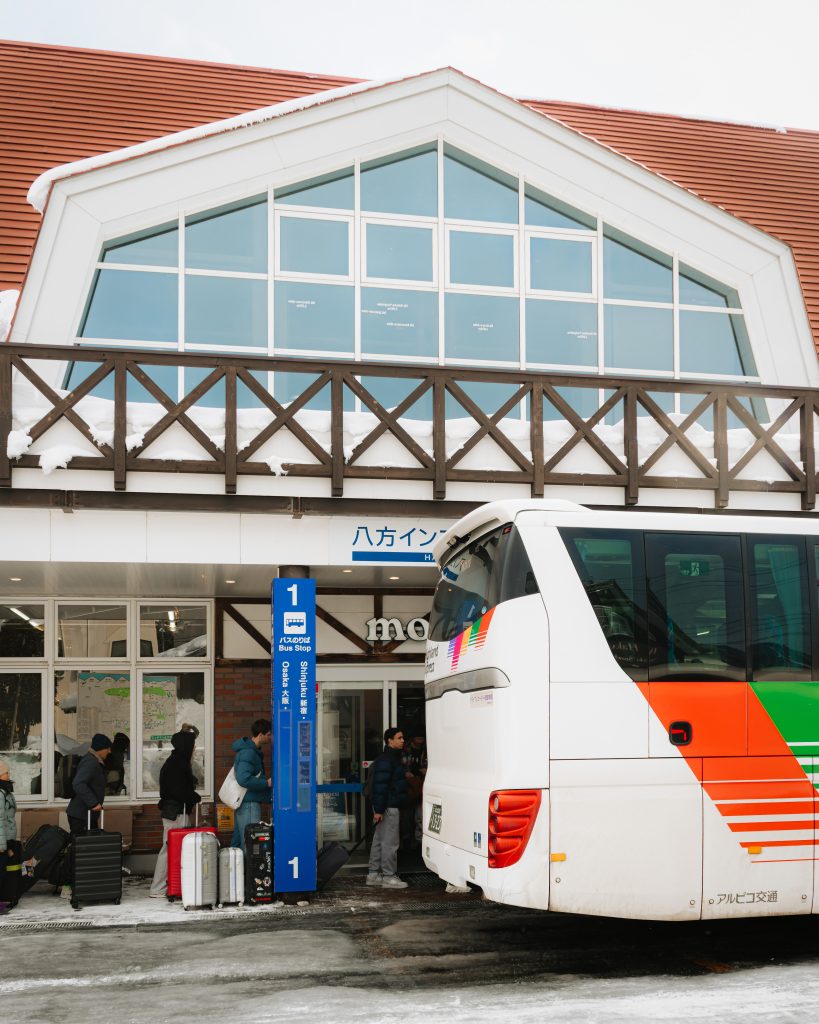
To make it short – Hakuba bus station is a little bit chaotic. It’s relatively small and pretty much busy all day long – people arriving with suitcases, ski bags everywhere, buses pulling in and out, drivers shouting destinations. It can feel a bit too much, especially if you’ve just stepped off a long coach ride. But it’s also one of the most important spots in Hakuba. Everything kind of revolves around it: long-distance buses, resort shuttles, transfers, taxis. If you’re coming from Tokyo or heading back, you will definitely pass through there.
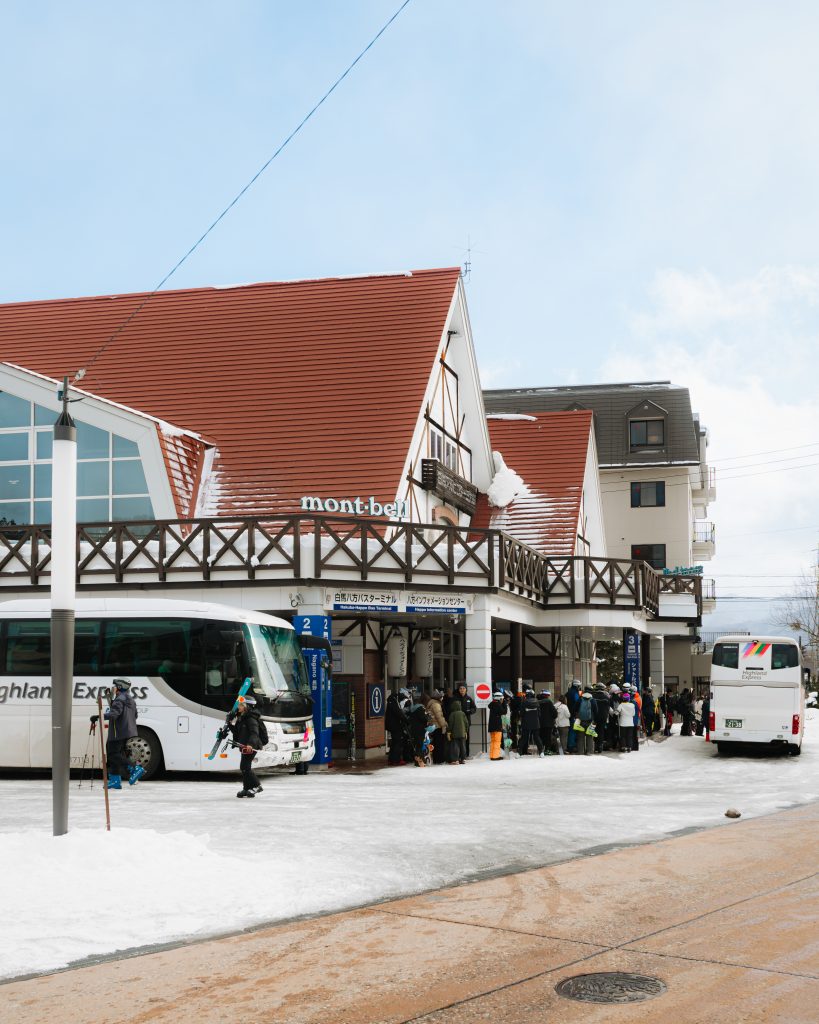
The good news: there are staff members inside who are genuinely helpful. If you need a taxi or aren’t sure where to go, just ask. I was staying outside the main Hakuba centre, so after getting off the coach I needed to arrange a taxi to my accommodation. Uber does work in Hakuba, but it can get very busy, especially in peak season, and sometimes you’ll be waiting a while. Luckily, there’s a free option at the station to call a local taxi. I used it, and it worked perfectly.
Should you buy a JR Rail Pass?
If you’re only travelling between Tokyo and Hakuba (via Nagano), the JR Pass is usually not worth it just for this trip. A single Shinkansen ticket plus the bus is typically cheaper than activating a full pass. However, if you’re planning a bigger Japan itinerary with multiple long-distance train rides, then it might make sense. Do the math before you buy – the pass is expensive.
Ok, I diverted a bit. Let’s get back to: how to get to Hakuba:
By bus
There are also direct buses from Tokyo Shinjuku to Hakuba, which can be easier if you want fewer transfers and less platform gymnastics. They usually take around 6-7 hours, depending on traffic and departure point. It’s slower than the Shinkansen combo, but potentially less stressful if you’re travelling with a lot of luggage.
By car
You could also rent a car and drive to Hakuba, which gives you more flexibility. The roads are well maintained, but keep in mind that it’s proper winter up there. Snow, ice, mountain roads… all very scenic, slightly less fun if you’re not used to driving in those conditions. Make sure the car has winter tires (or chains), and only go for this option if you feel confident driving in snow. Otherwise, Japan’s trains will happily do the stressful part for you.
3. What’s the best time to go skiing in Hakuba?
The ski season in Hakuba usually runs from roughly December to March, depending on snowfall. If you’re chasing that famous Japanese powder, January and February are generally considered peak months. That’s when snowfall is most consistent and conditions are at their best – which also means it’s peak season in every other way, like prices and crowds.
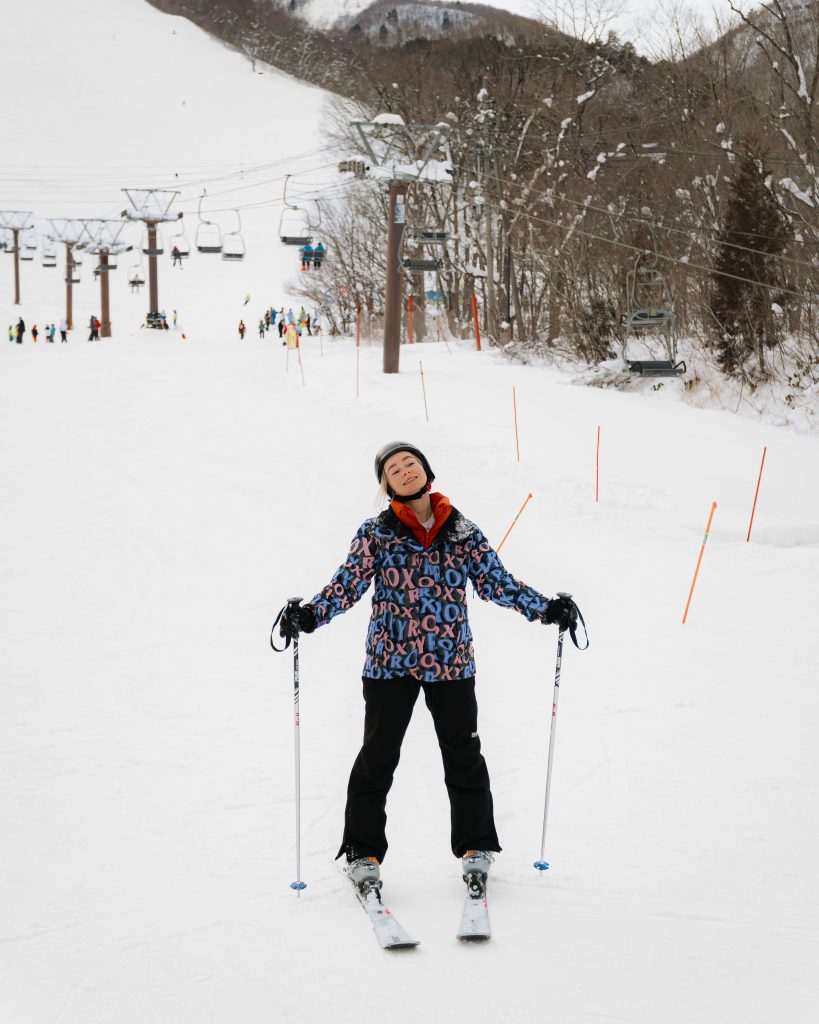
I went at the end of January. It was definitely cold (proper winter cold), but otherwise the conditions were great. There was plenty of snow, even some sunny days, and from my very inexperienced skiing perspective, the snow quality seemed excellent. I might not be the authority on identifying “legendary powder,” but snow-wise and weather-wise I had zero complaints.
4. Where should you stay in Hakuba?
When it comes to choosing where to stay, you’ve basically got two options: stay in the centre of Hakuba village – or stay a little outside.
The centre is more convenient if you want restaurants, bars and little shops within walking distance. It’s livelier, especially in peak season and you can easily pop out for dinner without thinking too much about logistics.
Or you can do what I did and stay slightly outside the main village area. It’s usually quieter, a bit more relaxed and sometimes better value.
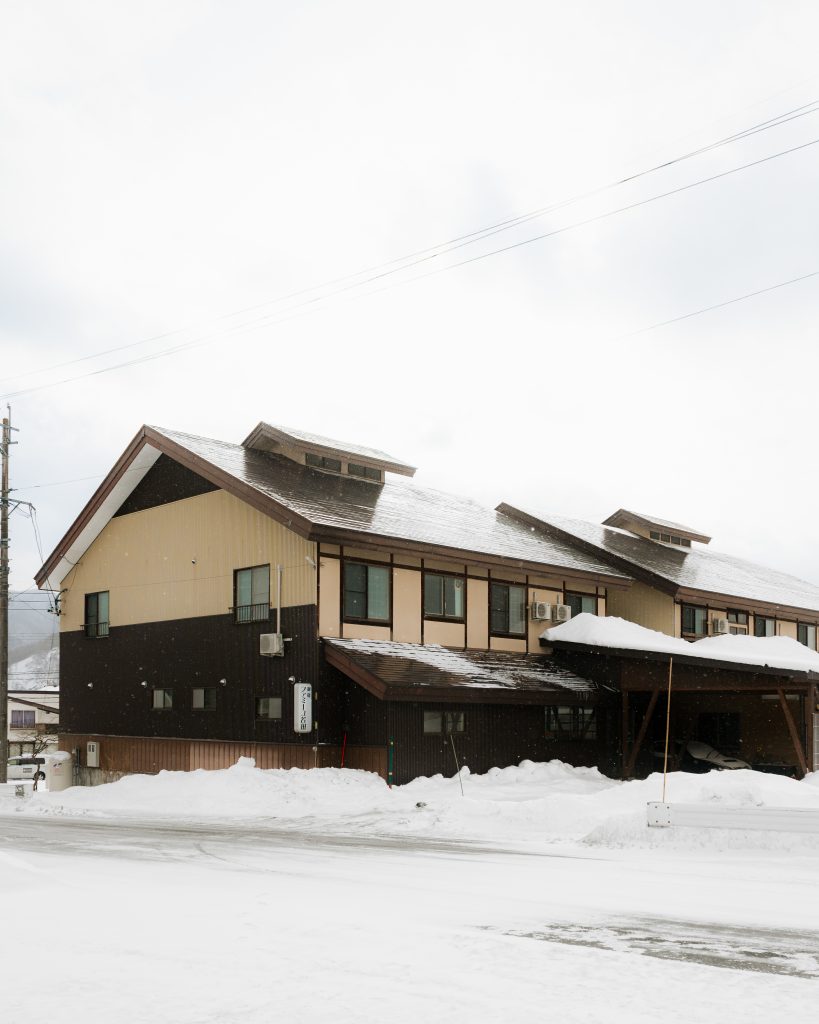
I stayed at Wakata Lodge (Here are the links if you would like to book on Booking.com or on Trip.com and Agoda). It’s a classic Japanese-style lodge with tatami mats on the floor – simple, cosy and most importantly: super warm. Which is not a small detail when you’re skiing in January.
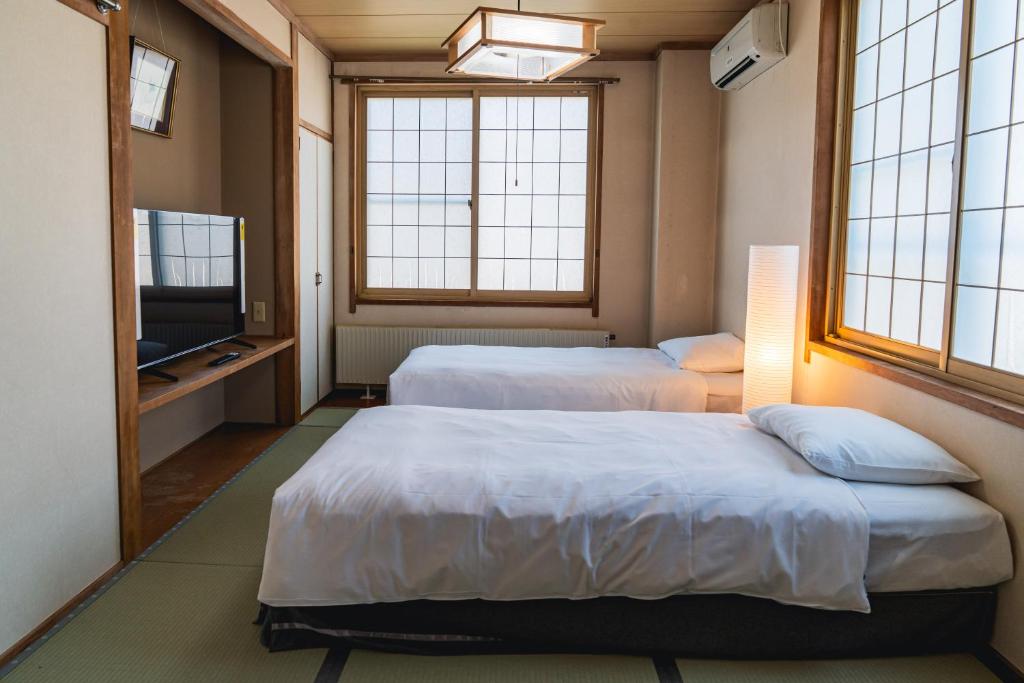



And it had my favourite thing ever: an onsen. Getting into hot mineral water after a full day in the snow? Elite life choice. The only downside was that there was no shower/bath inside the bedrooms (there was a toilet and sink). But since I ended up going to the onsen every evening anyway, I genuinely didn’t care.
There’s a restaurant located a few minutes walk that even had vegan options.
They also had a shuttle minibus running three times in the morning and twice in the afternoon to the town and to Iwatake ski resort, which was super helpful.
Speaking of ski resorts…
5. Where to ski in Hakuba?
First of all, as I already mentioned, Hakuba is not one ski resort. It’s a collection of multiple resorts (more then 10) spread across the same valley. So when people say “I’m going skiing in Hakuba,” that could mean a few different mountains. Which sounds overwhelming at first…and it was. But let me explain how it works.
The most popular ski resorts are:
- Happo-One – the most famous and home to the 1998 Winter Olympics; the largest and most central, with advanced terrain;
- Iwatake – famous for 360 degree-views and wide open terrain;
- Hakuba 47 – known for its terrain park, good snow, north-facing slopes and connection to Goryu;
- Goryu – long, open and kid-friendly runs;
- Tsugaike – wide gentle slopes, good for beginners, great amenities;
- Hakuba – Cortina – known for the best snow in the valley.
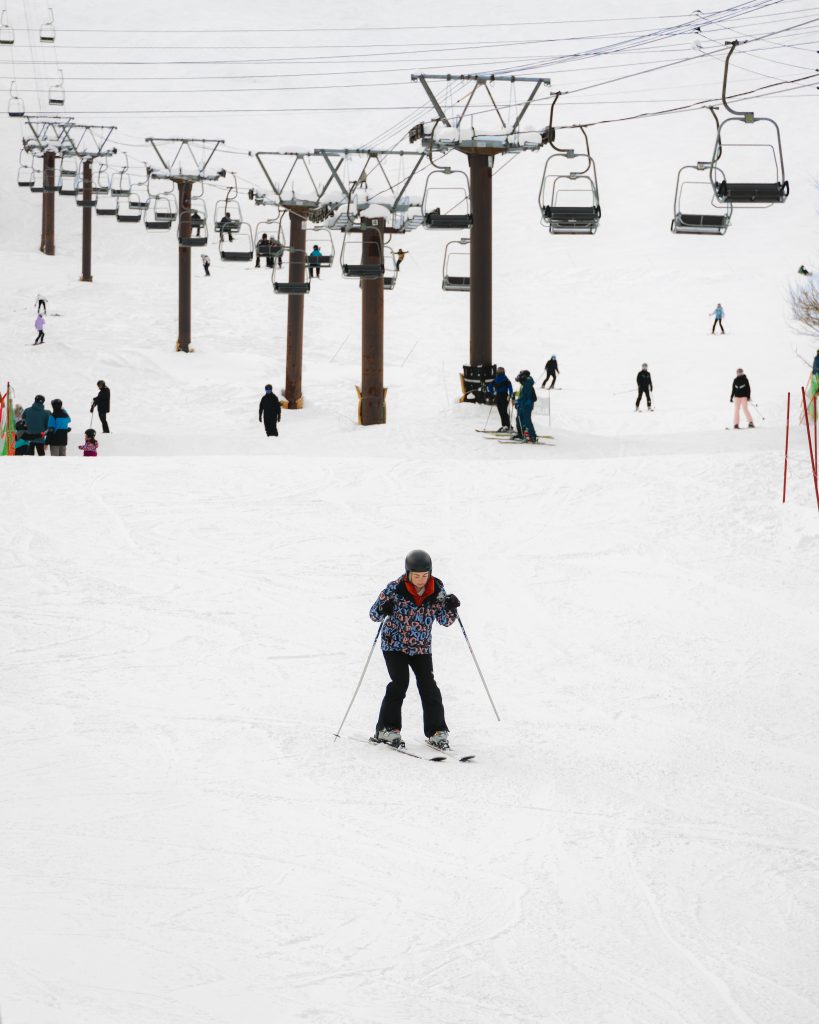
And now, you do not need to try all of them. Hakuba has enough skiing in one resort to keep you busy for several days, especially if you’re a beginner. It’s also naturally cheaper to buy a lift pass for a single resort. But if you’re experienced, staying longer or just like the idea of exploring different mountains, you can get the Hakuba Valley pass, which will give you access to multiple resorts.
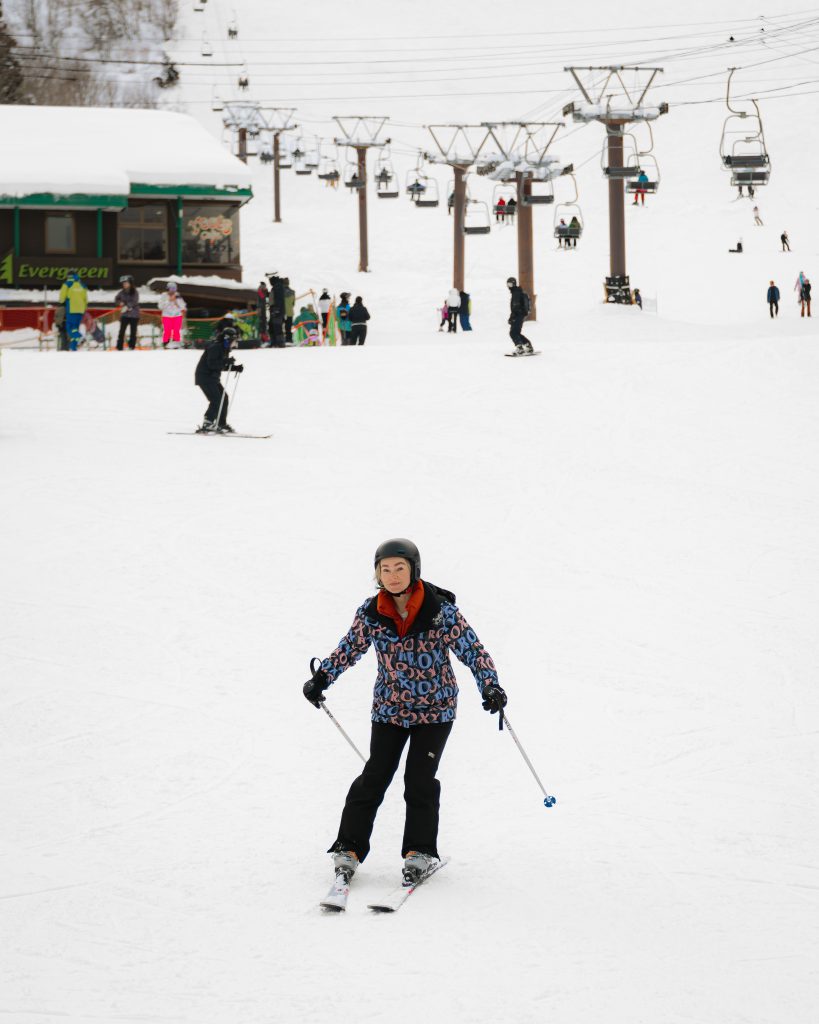
I ended up “skiing” in Happo-One, mostly because it was the only resort I really knew about when I was booking everything. I also needed an English-speaking ski lesson, and I wasn’t 100% sure which other resorts offered that (more on ski schools later). Overall, it was good – and the central location is definitely a big advantage. Plus, it had a great vegetarian restaurant. But as a total beginner, I’m not sure I would pick it again. It felt a bit busy at times and there wasn’t that much space.
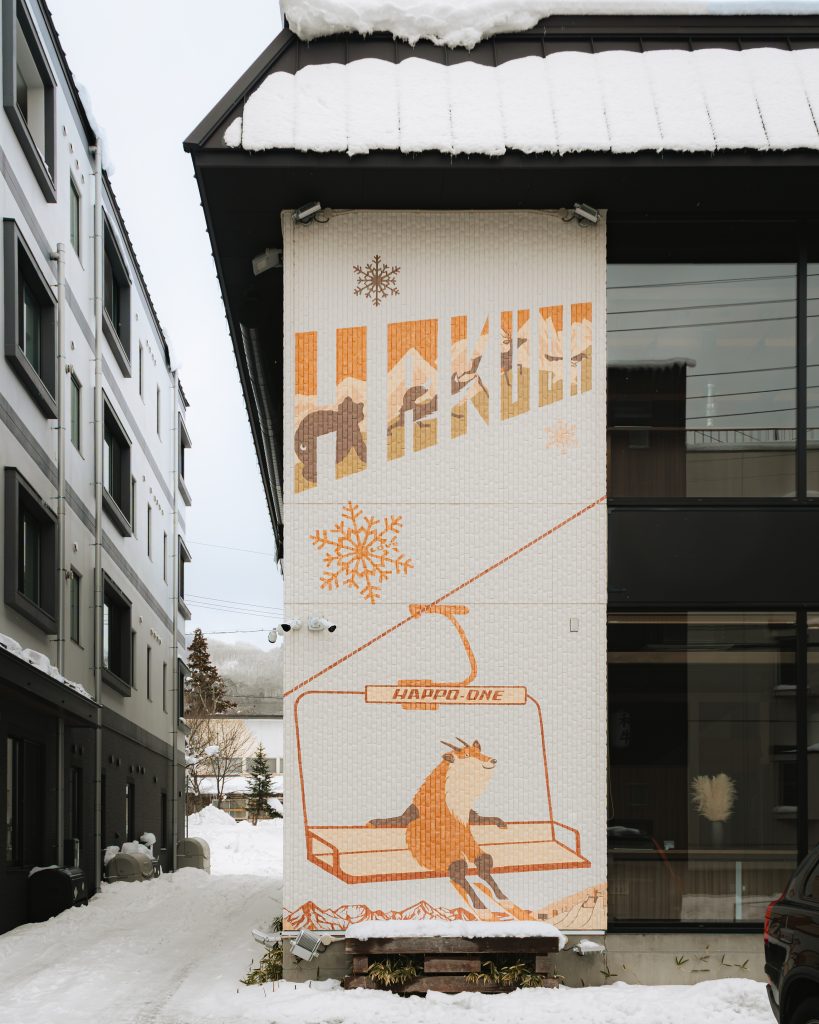
6. Where to rent skiing equipment in Hakuba?
If you’re not travelling with your own gear, renting ski equipment in Hakuba is very easy. You can rent everything: skis, boots, poles, helmets – and even full ski outfits if needed: jacket and ski pants. So technically, you could show up with just thermals and enthusiasm.
There are rental shops in the village as well as directly at the resorts. Many of them cater to international visitors, so sizing and communication aren’t a problem.
In the main village area, I’d say there are two big rental names you’ll come across: Rhythm and Spicy.
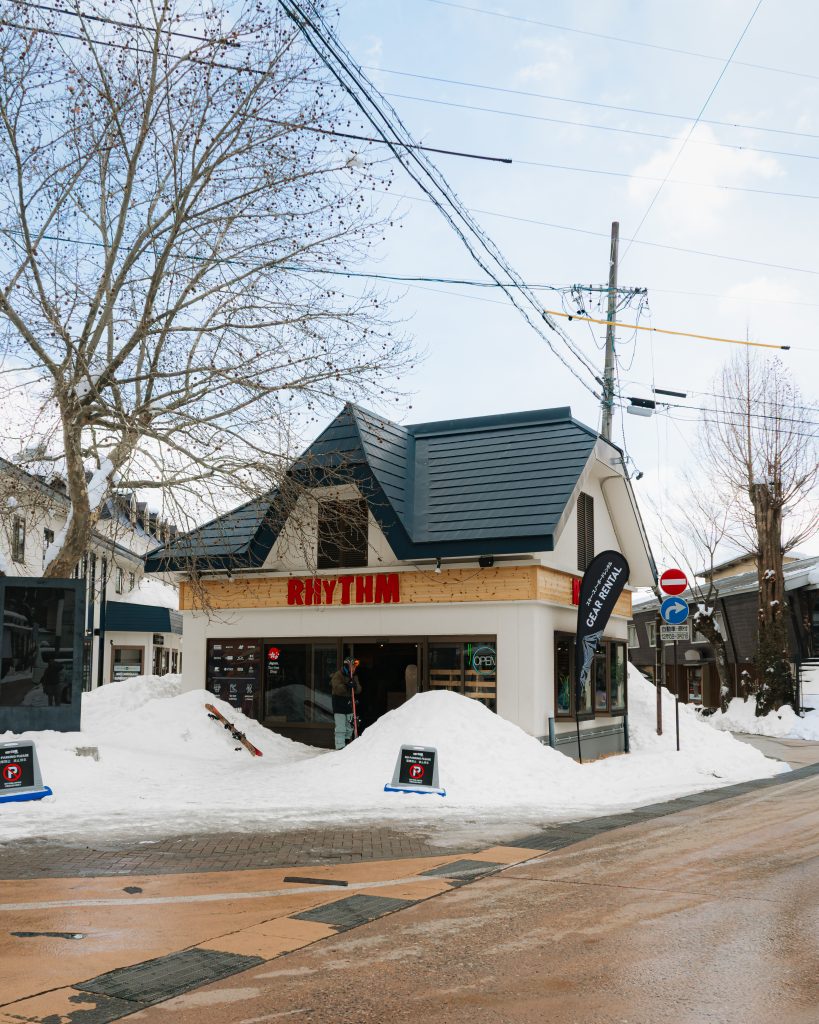
I rented everything from Spicy – mostly because of the price. It was cheaper, and the equipment was fine. But (important lesson incoming) I somehow did not rent a helmet at the same time. And you do need the helmet. So I ended up popping into Rhythm to rent a helmet – and I have to say, their customer service felt a bit more attentive. They were measuring feet properly, double-checking sizing and overall just seemed very precise and friendly. BUT this is purely my personal experience.
Booking and paying for equipment in advance is recommended, but not necessary.
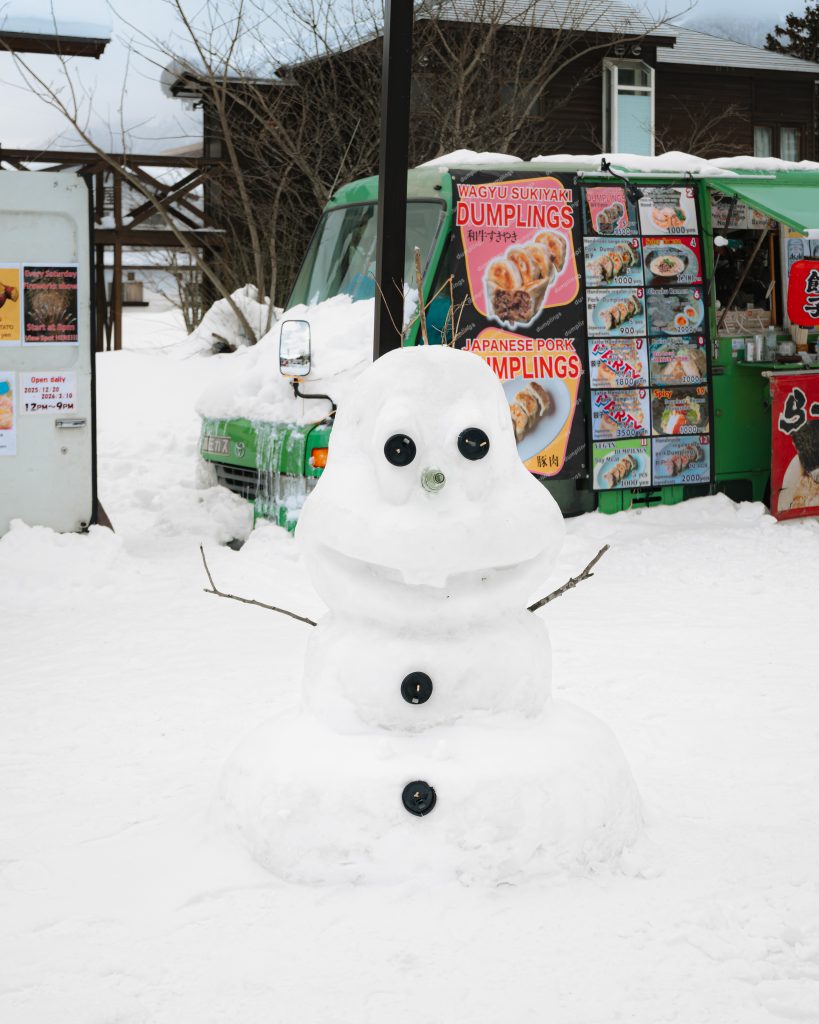
7. Where to book ski lessons in Hakuba?
Yes – you can absolutely book ski lessons in Hakuba. For all levels. From proper advanced skiers who want to refine technique… to people like me, who had never had skis on their feet.
If it’s your first time, I highly recommend booking a lesson. It makes everything less chaotic and slightly more controlled.
I booked mine with Evergreen International Ski School. The lesson took place (as I already mentioned) at the bottom of Happo-One ski resort. You can choose between a half-day or full-day lesson. I went for a full-day group lesson.
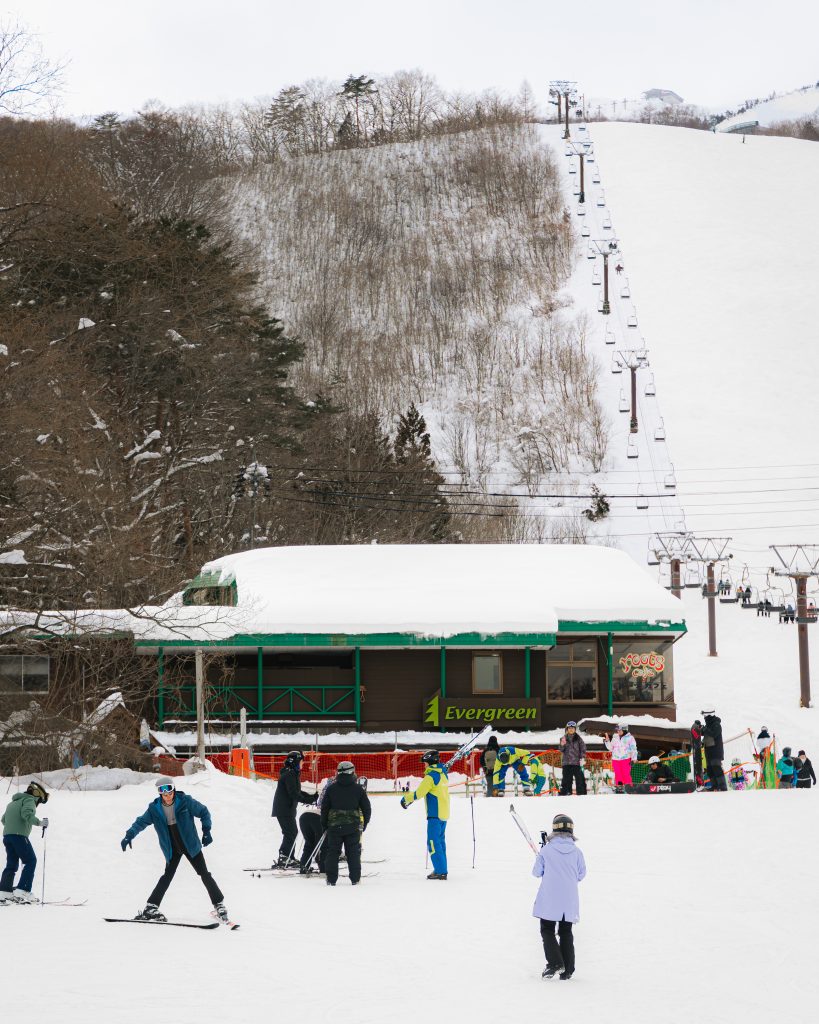
The group wasn’t big (maximum 10 people), and after lunch a few people left because they had only booked half-day. You should be there for around 9.30 am but by the time the lesson started it was easily 10 o’clock.
All the instructors were foreign and English-speaking. I had a Danish one. He was patient, calm… but very Danish, if you know what I mean.
Lunch was around 12:30 at a restaurant just a few meters from where we were practicing. It was fully vegetarian/vegan, which I personally loved. After lunch, we still had a few more hours of skiing.
Since it was everyone’s first lesson, we didn’t really go anywhere dramatic. Definitely no ski lifts on day one. Although – important – you still have to buy a lift pass in advance. They were checking.
So just a quick ski lesson sum up:
To start a ski lesson – whether you’re a complete beginner or already confident on the slopes – there are a few things you need to have sorted beforehand.
- skis and poles,
- ski boots,
- a helmet,
- appropriate clothing: waterproof ski jacket and pants, thermal layers, ski socks (not regular cotton ones), gloves and ideally goggles or sunglasses,
- lift pass: even if you’re not planning to use big lifts yet – instructors will check.
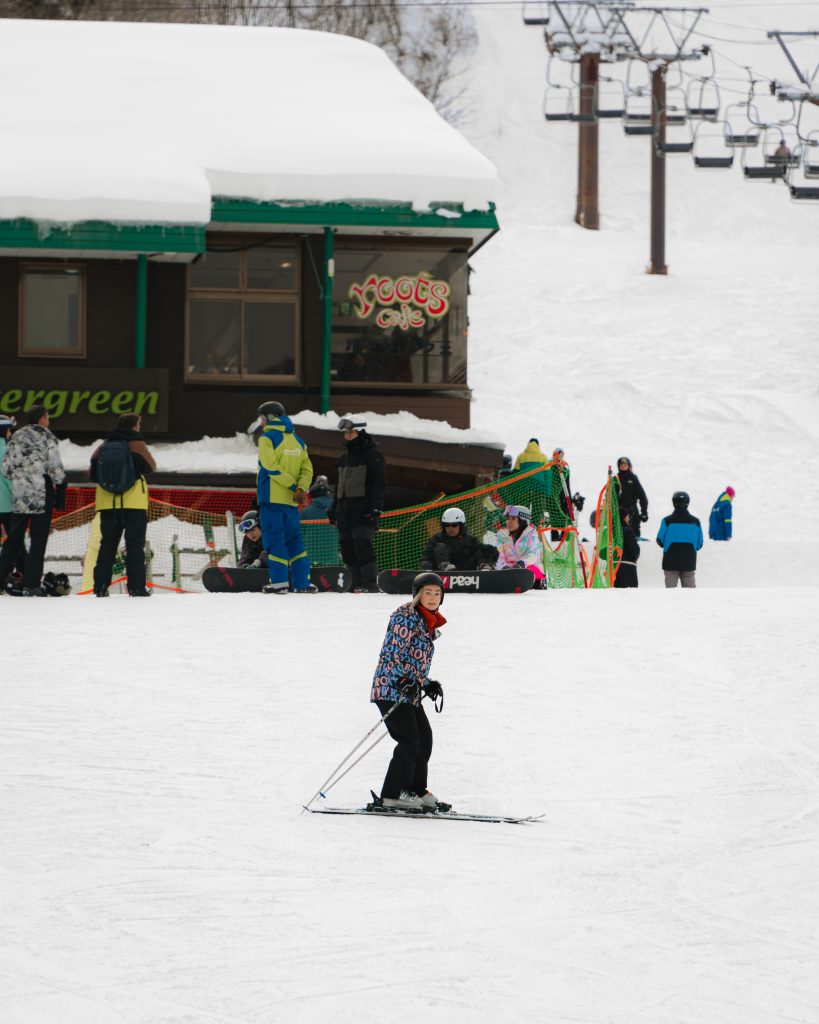
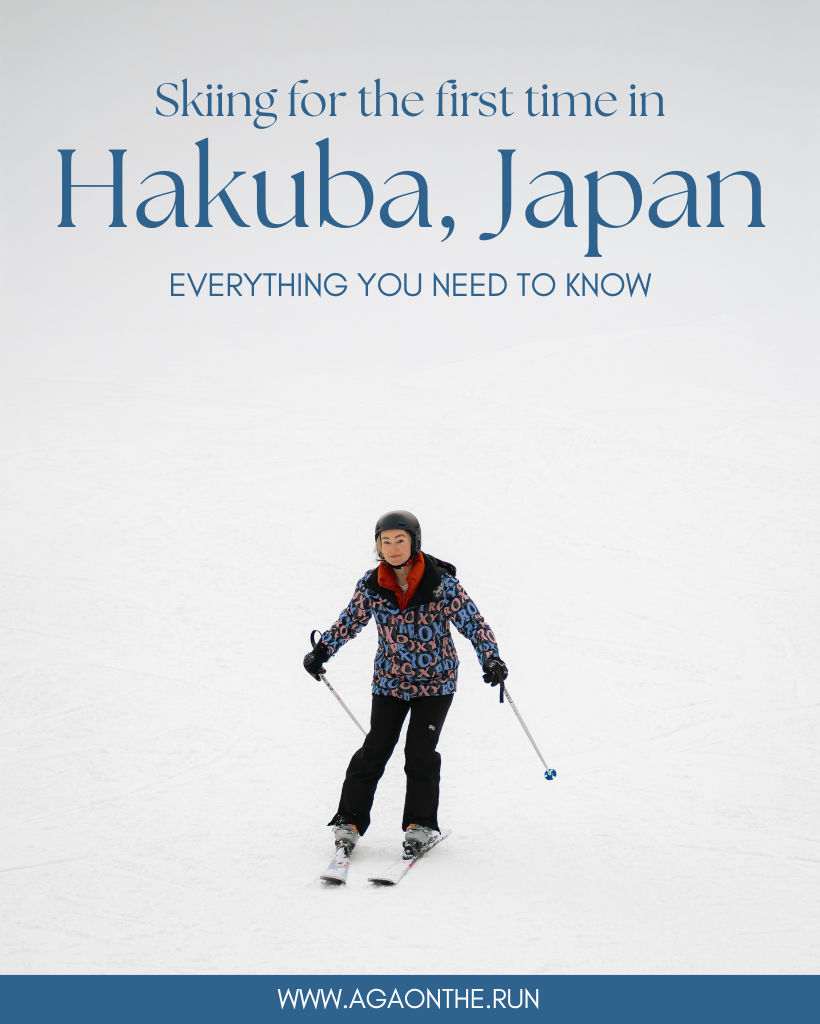
We finished the lesson around 3.30 pm. Overall, it was a really good first experience. I don’t want to brag, but I kind of nailed it. I rollerbladed a lot as a kid, and the movements are surprisingly similar. So skiing in Hakuba for the first time – a full success.
The only small downside was that the practice area wasn’t huge. There were a few other beginner groups learning at the same time, and occasionally quite advanced skiers were flying down the hill next to us at impressive speeds. But no one crashed into anyone, so we’ll call that a win.
And one very important thing:
book your ski lesson in advance. Especially in peak season. These spots fill up quickly.
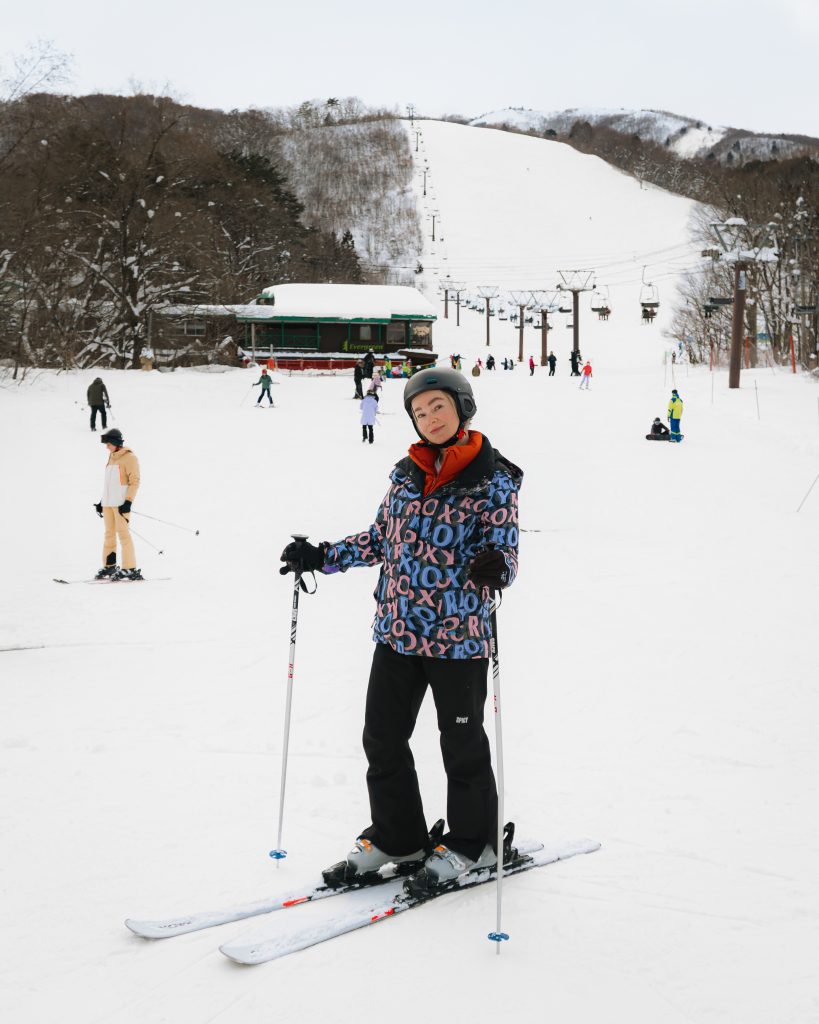
Other ski schools:
If you specifically want an English-speaking ski school, you can also check the other two schools: Hakuba Snow Sports School and F-style Ski School. They operate in Goryu resort – a slightly more beginner-friendly one.
8. Is skiing in Hakuba expensive?
Yes. But also… skiing anywhere is expensive. That’s just the reality of voluntarily sliding down a mountain with 2 sticks on your feet. Haha
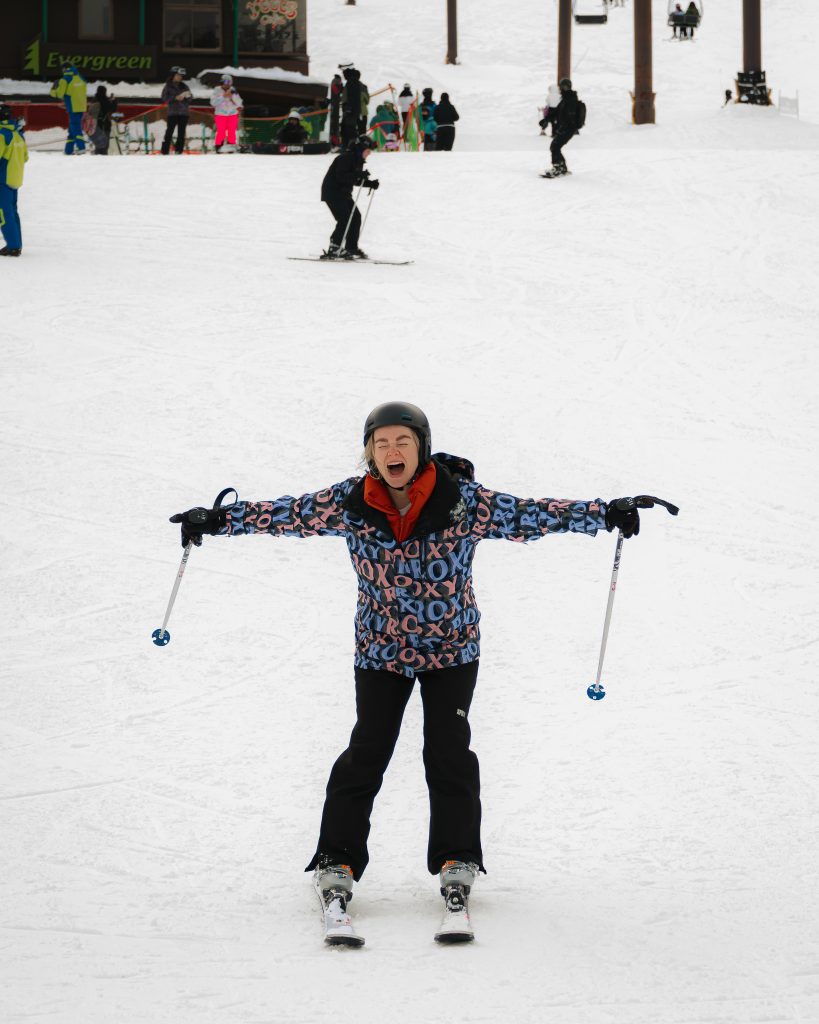
From friends who ski regularly in the Alps, I’ve heard that Japan isn’t considered particularly expensive compared to Western Europe. Lift passes and lessons can actually be cheaper than in places like Switzerland or France. But for me? It was still expensive. Especially as a complete beginner who had to rent absolutely everything. Skis, boots, helmet, ski clothes, lift pass, full-day ski lesson..It all adds up.
And that’s just the mountain costs. You still have accommodation, transport to Hakuba, meals and the occasional hot drink to emotionally recover from your first fall.
So yes, Hakuba isn’t outrageously overpriced in global ski terms. But skiing as an activity is not cheap. If it’s your first time and you’re starting from zero gear like I did, prepare your wallet accordingly.
9. Where to go for apres SKI in Hakuba?
Ok, but coffee first
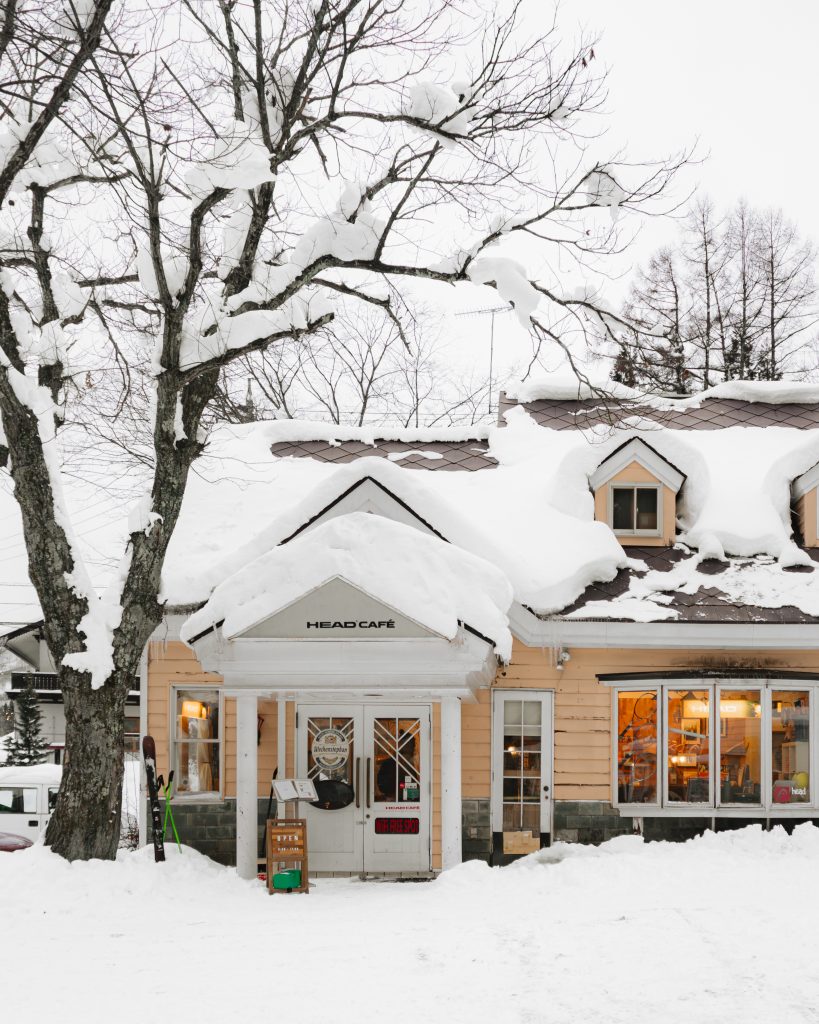
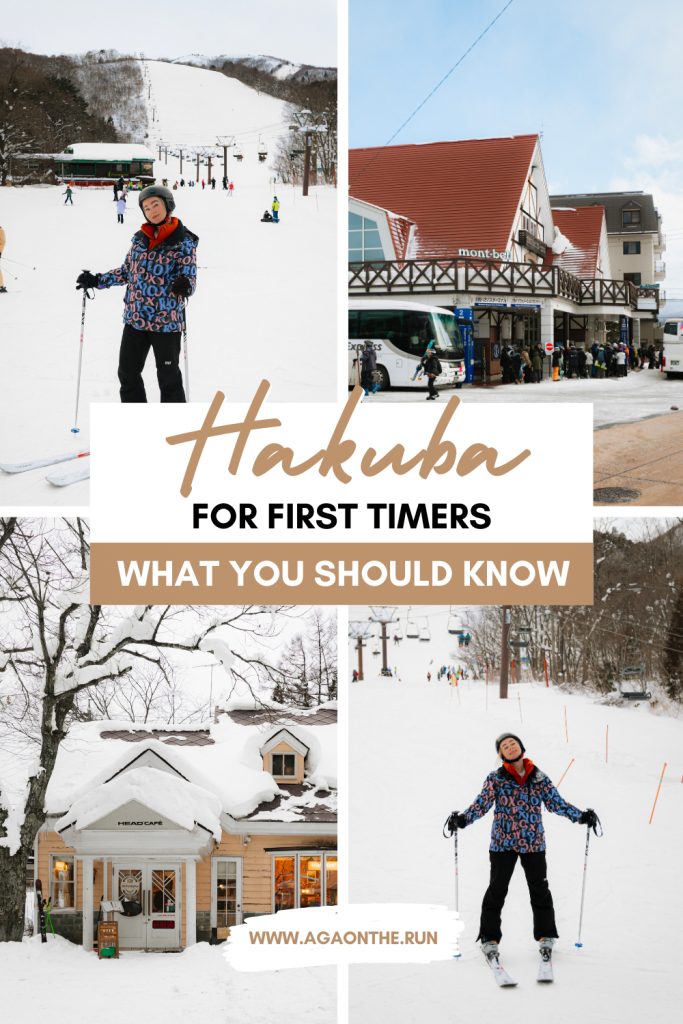
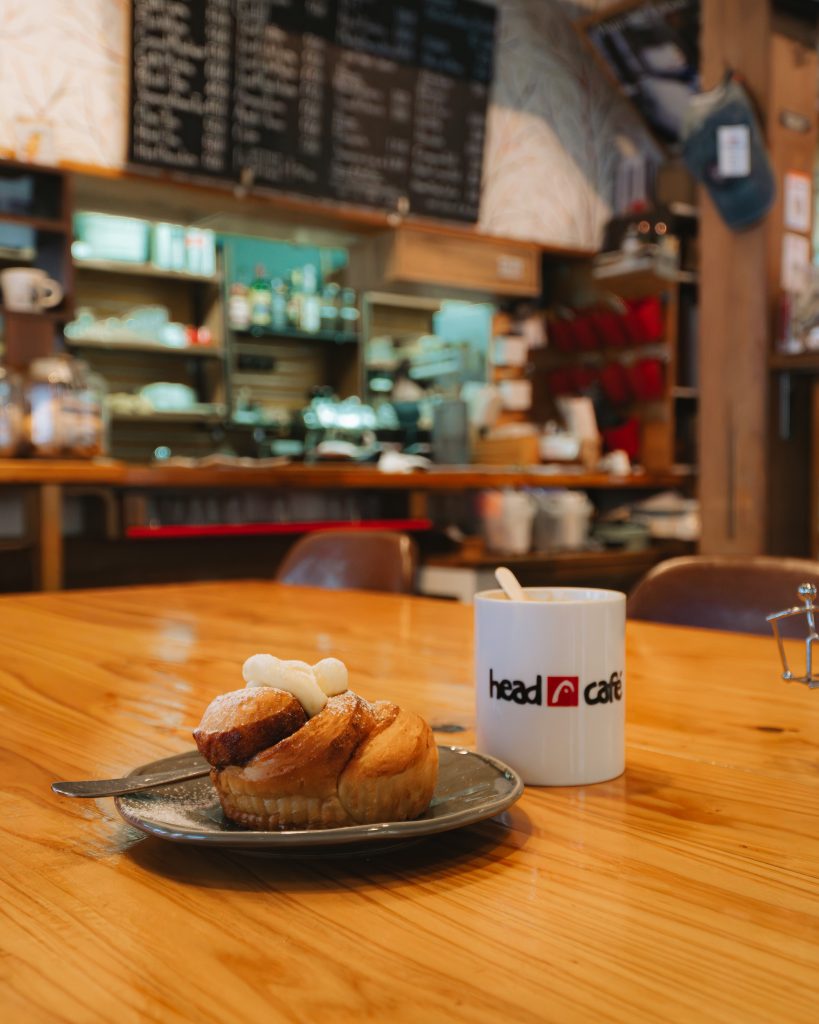
Well, the first thing I did after finally escaping my torture ski boots (seriously, how do people wear them for days?) wasn’t even proper après ski – it was coffee. I went to Head Café. The coffee itself wasn’t life-changing, but the vibe was really cute, the staff were lovely, and the pastry I had? Almost perfect. Possibly enhanced by exhaustion, but still.
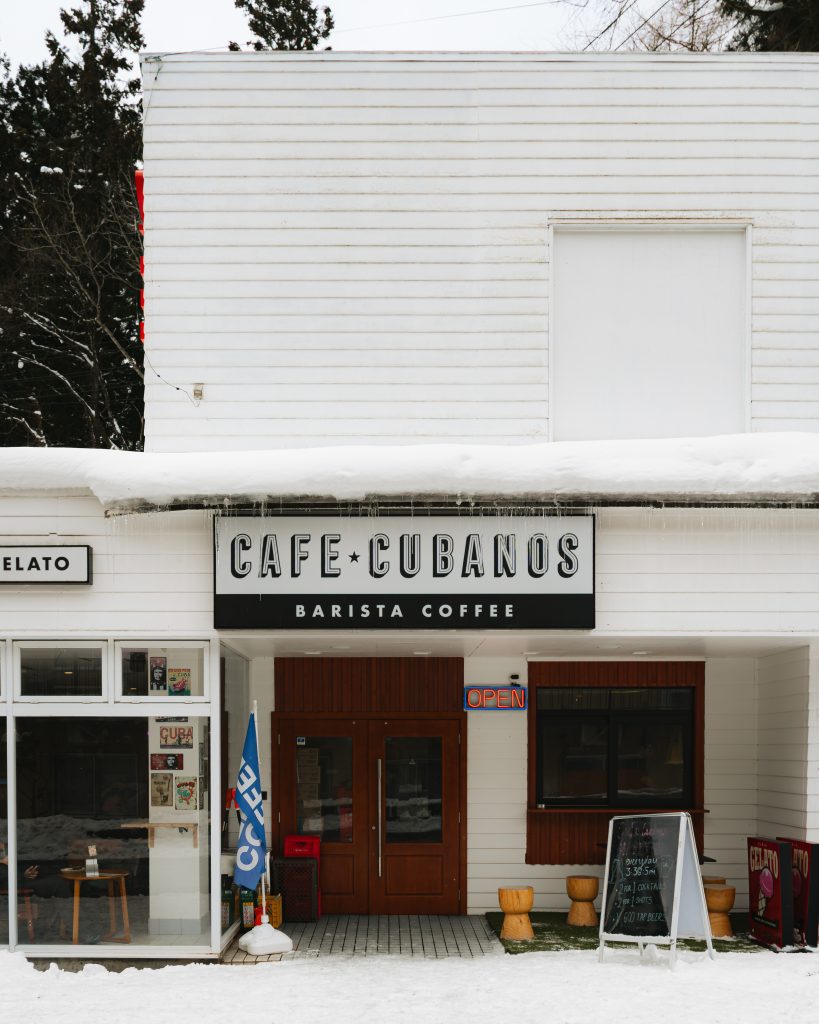
Café Cubanos and The Clubhouse Café & Bar by HHG are also worth checking out for coffee.
When it came to actual après ski…
Apres ski in Hakuba definitely exists. In the evenings, a lot of the action naturally centres around Hakuba’s main village and the spots near Happo-One. The vibe is relaxed, chatty and perfect for unwinding with a drink. The majority of pubs and bars pull in a more international crowd – thanks to all the Aussies and Europeans who make this valley their snowy home every winter. But mainly Aussies – you’ll hear the accents everywhere in winter.
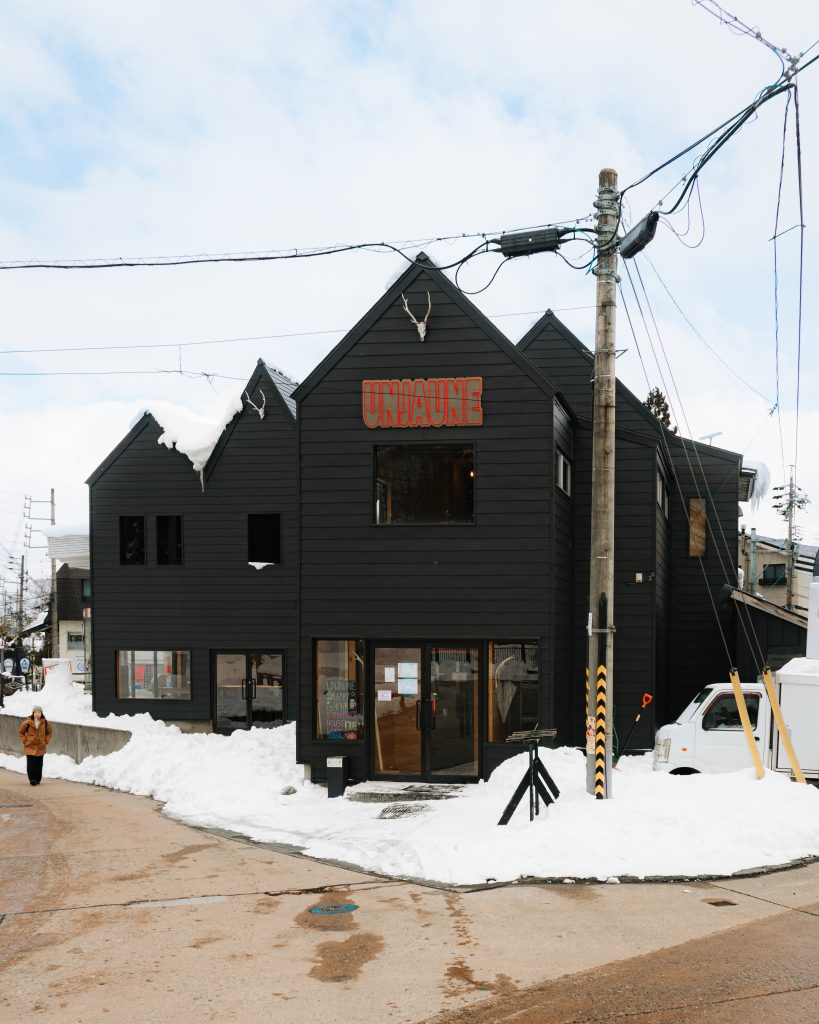
I first checked out Hakuba Après by HHG, which looked super cute, but it was fully outdoors, and I was cold at that point in the day. So instead, I ended up at Unjaune, sipping a classic Japanese après ski drink: chuhai. The place was super cosy and warm, and the staff – mostly Aussie – were incredibly friendly.
I think we’re almost done. Maybe just one thing to sum it up…
10. Is going to Hakuba worth it?
I say: absolutely. I really did enjoy my time there – even if it was short – and I’m already quietly planning my return next year.
Yes, at the beginning it can feel a bit chaotic. There are multiple resorts, different lift passes, rental shops, ski schools, buses going in all directions… it’s a lot. But once you’re actually there, everything falls into place surprisingly quickly. It’s organised, efficient, and much easier to navigate than it first appears – especially if you’ve done a tiny bit of research beforehand. (You know… like reading this blog post.)
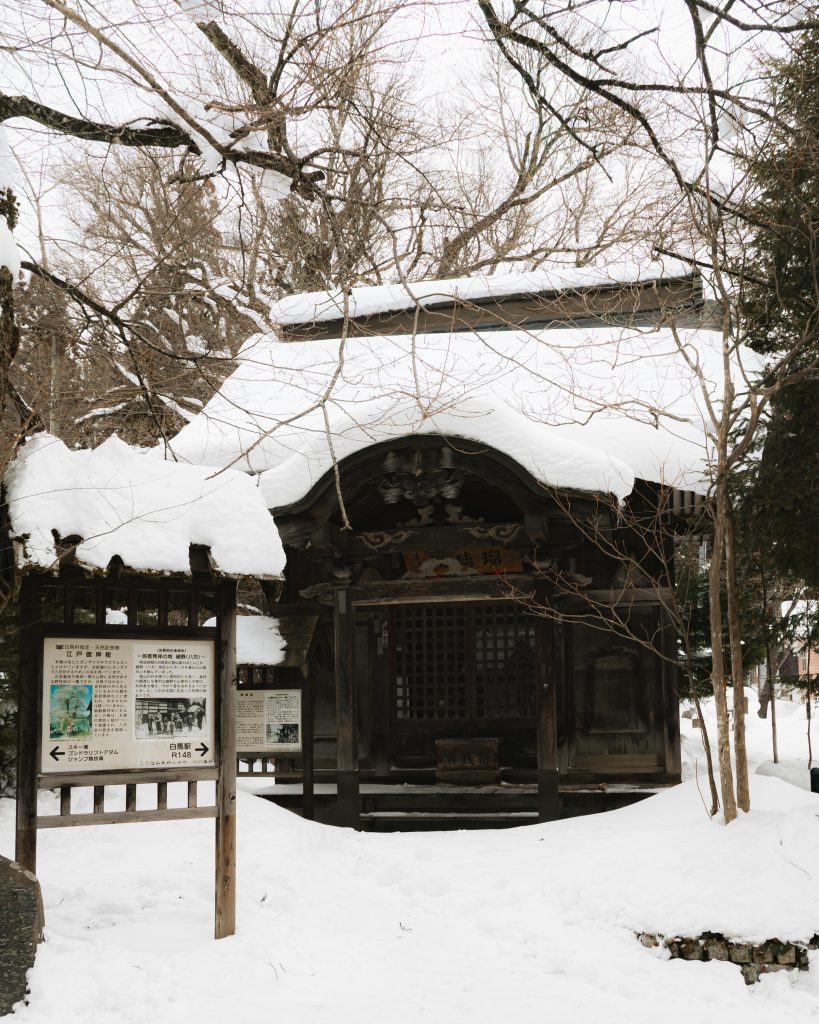
The snow was great, the weather treated me well, and the overall vibe in town was really cool – international, relaxed, friendly and very used to hosting winter chaos. For skiing in Hakuba for the first time, it honestly couldn’t have gone better for me. It felt like a successful first attempt at something I’d always low-key wanted to try.
So yes – worth it. For all levels of skiers. Even for a beginner. Maybe especially for a beginner.
Okay… I know this was long.
Very long. Possibly “did she really need to include that much detail?” long.
But if you’re planning skiing in Hakuba for the first time, I genuinely hope this gives you everything you need to make it smooth, less overwhelming and actually enjoyable from day one. Because yes – it can feel like a lot at the beginning. Resorts, rentals, logistics… But once you spend a day or two in Hakuba, you’ll know all about it. And then you can focus on the important things: staying upright, enjoying the snow and rewarding yourself with an onsen and something warm afterwards.
And visiting Snow Monkey Park! Find out how to get to those cheeky creatures on your own – no tour required. My guide answers all your questions and makes the whole trip easy to plan.
If this post saves you even one small stress moment on your trip, then the detail was worth it.
And if you end up loving skiing in Hakuba for the first time as much as I did… well. See you on the slopes next winter.
Hi, it’s Aga, the author of this blog. If you found this blog post interesting, entertaining or useful, please think of buying me a virtual coffee to support the site’s running costs. But if you know me, I might actually spend it on coffee. Thanks!
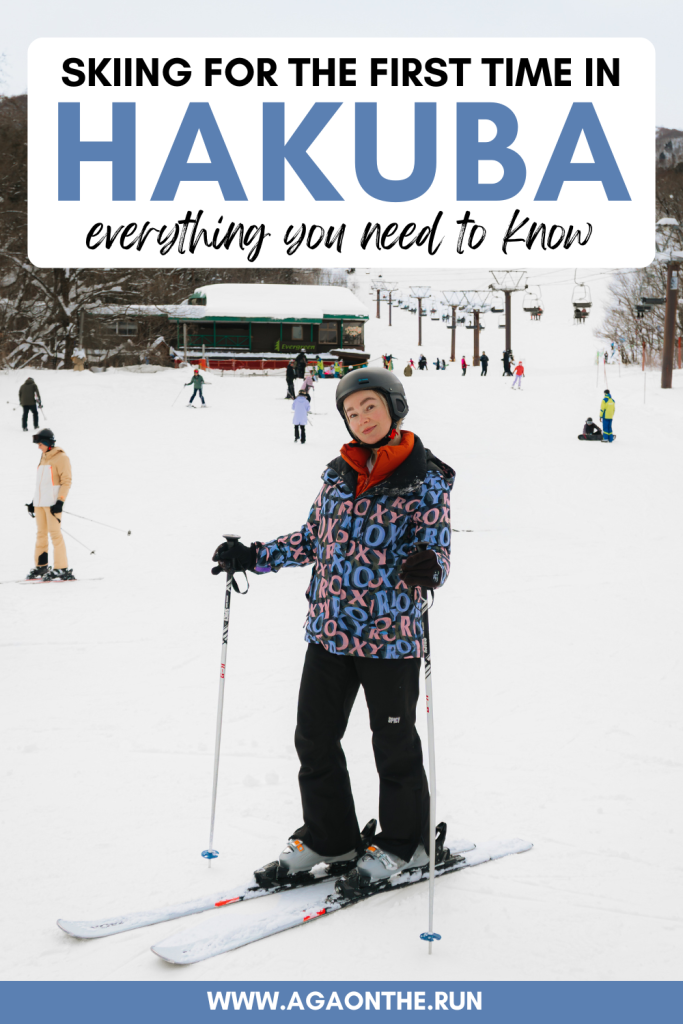
Pin for later!


[…] in Japan in winter and loved it! If you’re planning a ski trip to Hakuba, I’ve put together a full guide for first-time visitors covering where to stay, how to get there, and what to expect once you […]