Do you like hot baths?
Do you like monkeys?
Do you like monkeys taking hot baths?
If your answer is a confident triple yes, you’re in the right place.
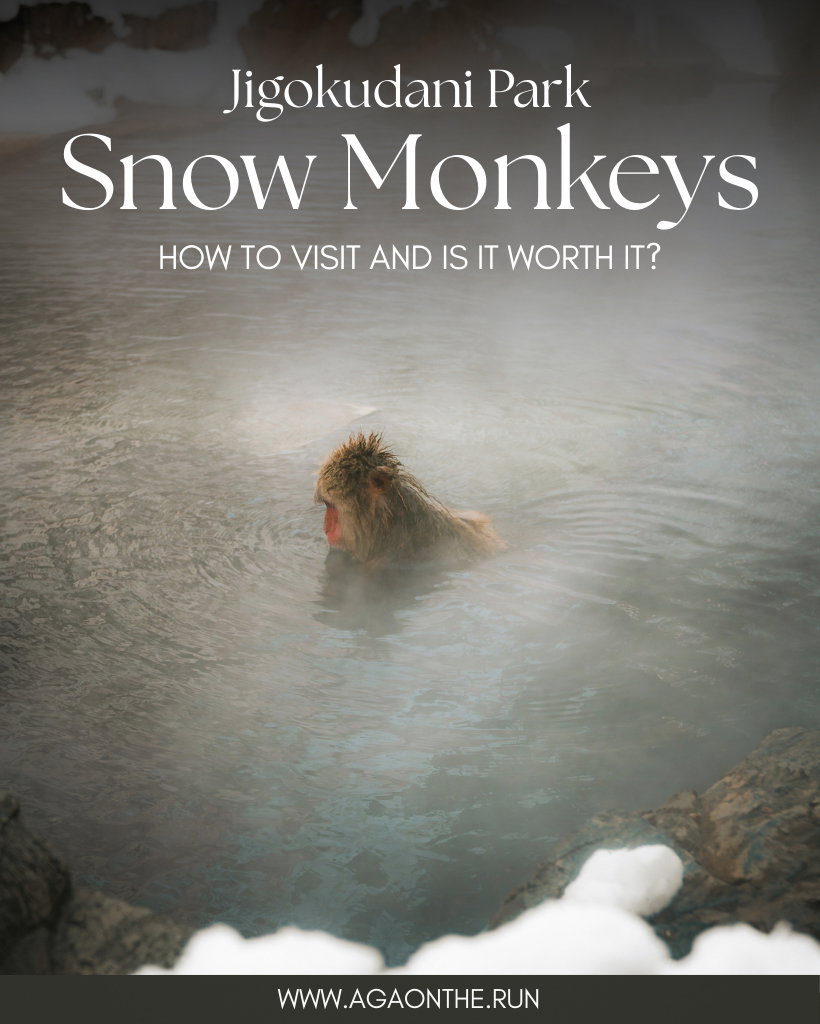
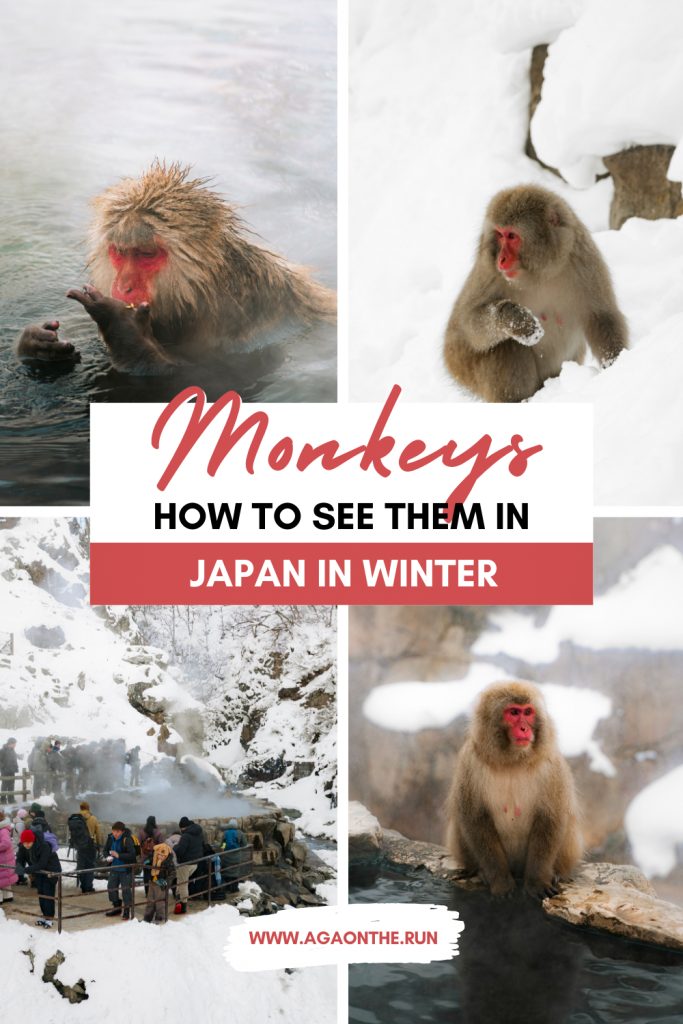
Snow Monkey Park is one of Japan’s most famous wildlife experiences – and for good reason. In winter, wild Japanese macaques gather around steaming hot springs, surrounded by snow-covered forest, creating those almost surreal scenes you’ve probably seen all over the internet.
“Winter” is the important word here. While the monkeys live there year-round, the iconic snow-covered hot spring scenes only happen in colder months – this is when the park is most famous.
Are you planning a ski trip to Japan? Check out my first timers guide to Hakuba, where I share all the tips about organising your first ski trip in Japan.
So if you’re planning a visit to Snow Monkey Park, this guide will walk you through everything you need to know before you go. I’ll cover how to get there, what the winter conditions are really like, how much time you need and what to expect once you arrive.
Since I visited in winter, you’ll also find practical tips for snowy trail conditions, crowds during peak season, and whether you’re actually likely to see the monkeys bathing in the hot springs. And of course, I’ll share my honest thoughts on whether the experience is worth the journey – especially if you’re coming from places like Tokyo, Nagano or Hakuba.
By the end, you should know exactly what you’re signing up for – and whether Snow Monkey Park deserves a spot on your Japan itinerary.
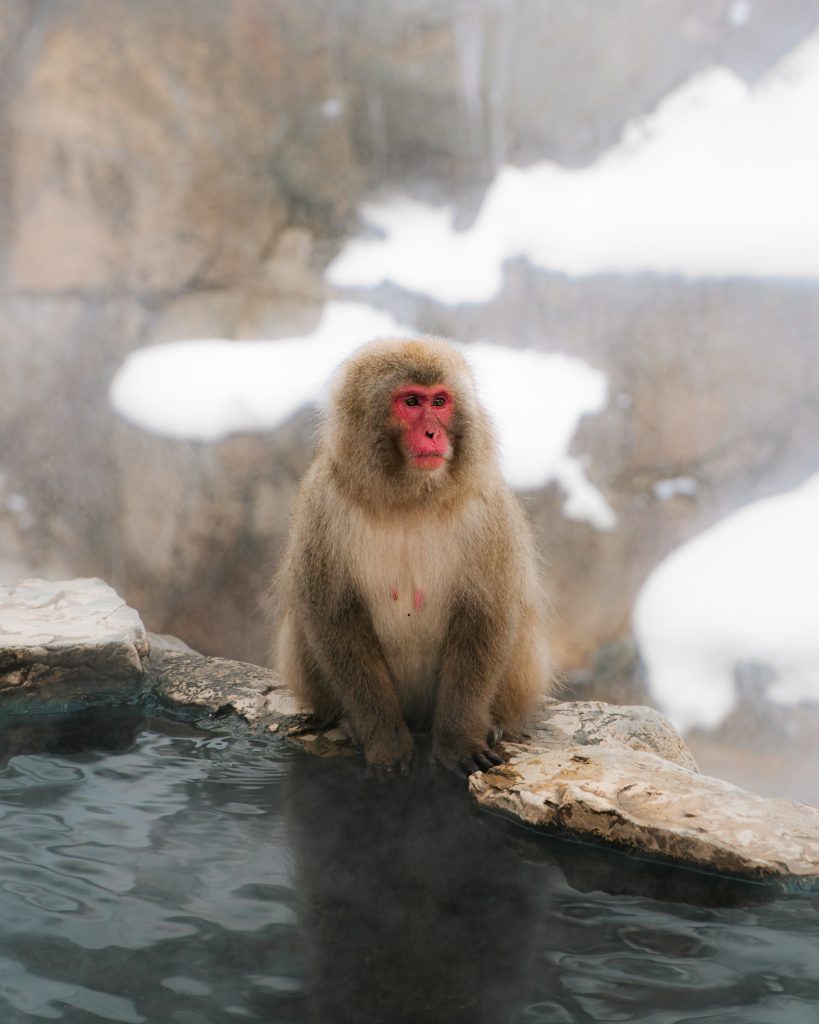
Ready? Let’s jump straight into…the bath! Haha
How to visit Snow Monkey Park
Let’s start with the basics:
1. Where is Snow Monkey Park?
Snow Monkey Park is officially called Jigokudani Monkey Park, and it’s located in Yamanouchi, in Nagano Prefecture, central Japan. The park sits in a forested valley within Joshinetsu Kogen National Park, about an hour from Nagano City.
It became famous for one very specific reason…you know the reason…we all know the reason! It’s home to wild Japanese macaques bathing in natural hot springs during winter. Which in recent years has become one of Japan’s most photographed wildlife experiences.
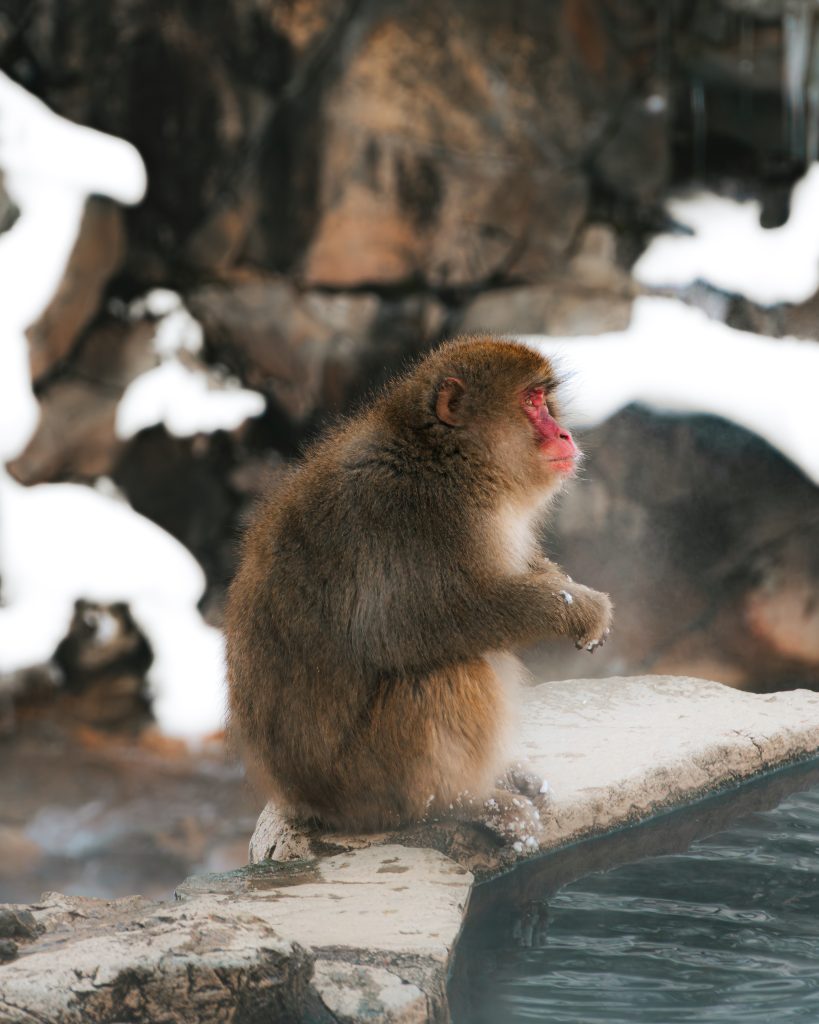
And “wild” and “wildlife” are the other important words here. So before we go any further, let’s answer this question:
2. Is Snow Monkey Park ethical?
One of the biggest concerns people have before visiting (I did, and hopefully you do too) is whether this is a zoo-like attraction.
Short answer: it isn’t.
But there are more things to consider.
On the plus side:
The Jigokudani Monkey Park was established in the early 1960s to help protect local macaques that were losing habitat and increasingly raiding nearby farms, with conservationist Sogo Hara encouraging them to gather in one area to reduce conflict with villagers.
The macaques at Snow Monkey Park are completely wild and live in the surrounding forest. They are not caged, trained or forced to perform. The hot spring area was created for them decades ago, but the monkeys choose when – and if – they come down to bathe.
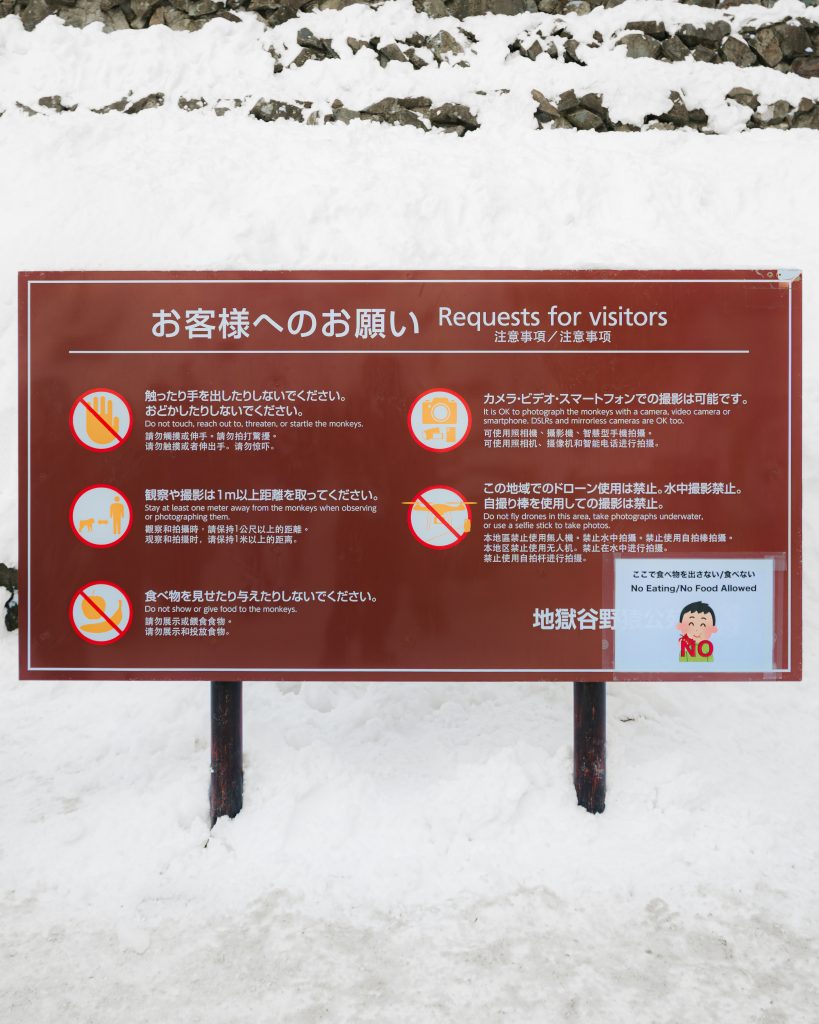
You as a visitor are required to keep your distance and always get off their way when they’re trying to pass. There are also strict rules against touching, and feeding. You shouldn’t even have any food on you. You can only observe them on their terms.
You’ll be presented with all the “nos” before entering the park. So yeah, don’t be a d..k and follow the rules!
On the other side:
The monkeys are provided with food by park staff, to ensure they remain in the area, which can lead to dependency and potential behavioural changes. There are also stories of the staff deliberately throwing food in the pools to encourage them to bathe for tourists.
My other worry was the amount of people there. It seemed a bit too much. BUT, the park authorities are actually planning on reducing the number of visitors, by online ticket sales and limiting tickets on busy days. You are also advised to use public transportation rather than private cars.
So yes, definitely not 100% ethical.
And a quick honesty moment: some of these details about the park – like feeding for tourists – I only learned while researching for this post. That’s on me. I should have looked into it more before visiting!
That said, from my own observation (as someone who is definitely not a monkey expert), the macaques seemed rather happy and unbothered by people. They were far more interested in grooming, soaking and doing their monkey business than paying attention to visitors. During my visit, no one tried to touch or feed them, and the atmosphere felt calm and respectful. So it definitely felt more like a responsible wildlife viewing rather than a staged animal attraction. Which I’d never go to.
Sorry, that section just grew more than I expected. Back to basics now.
3. How to Get to Snow Monkey Park from Tokyo, Nagano, Hakuba
Getting to Snow Monkey Park takes a bit of effort – no matter where you’re coming from. It’s not difficult, but it does require a combination of train or bus and a walk through the forest. It’s recommended that you visit the park earlier rather than later, especially as it closes quite early: 4 pm during winter season (November to March) and 5 pm during green season (April to October).
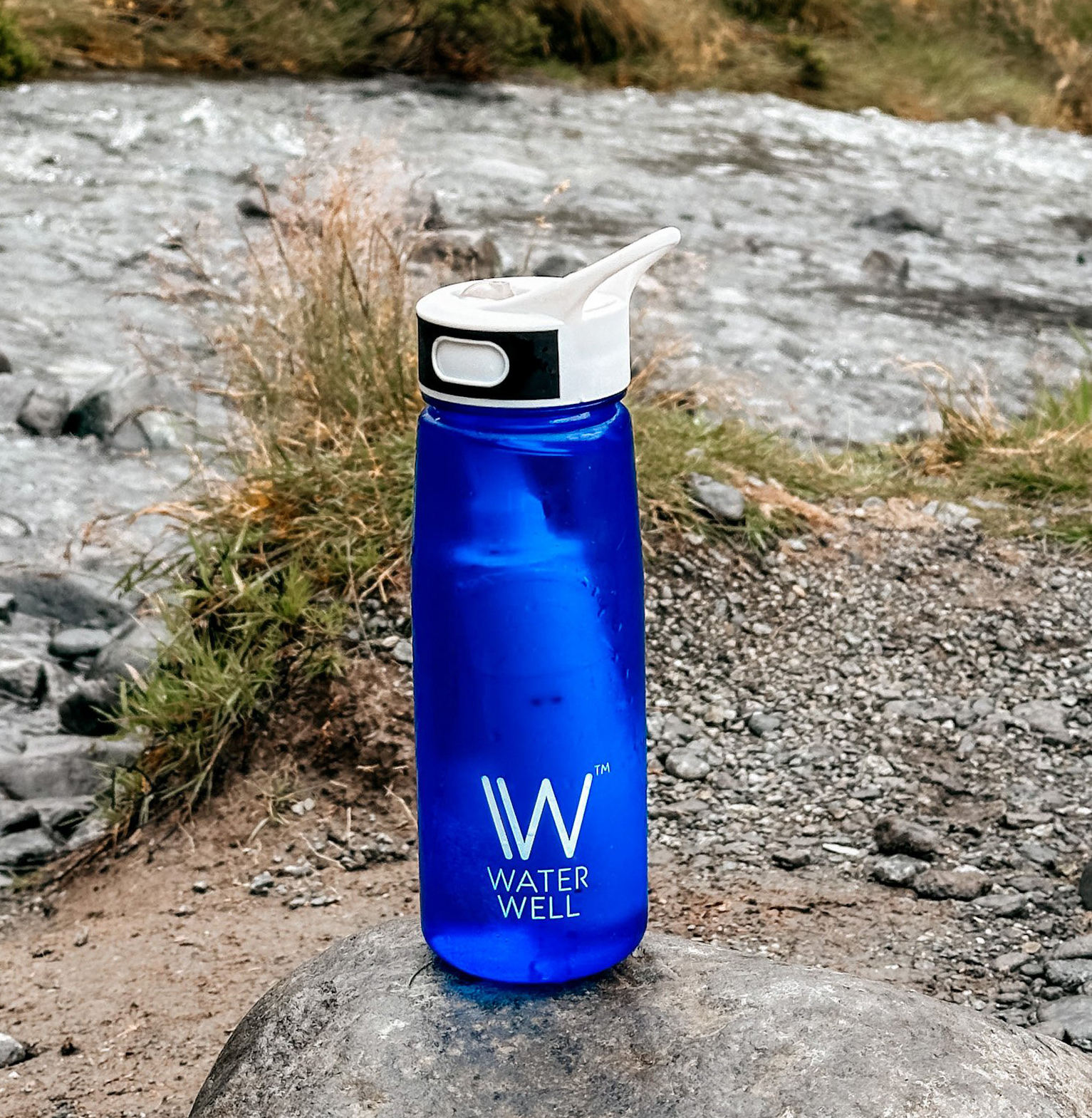
Don’t forget to stay hydrated on your way to Snow Monkey Park. I always travel with WaterWell filter bottle, so I can refill anywhere without buying plastic bottles. Grab yours before your trip!

From Tokyo
From Tokyo Station, you’ll first take the Hokuriku Shinkansen to Nagano Station (about 1.5 hours), then continue by bus to the park entrance. Altogether, it’s roughly a 3–4 hour journey one way, depending on how well you’ll pair the connections.
The bus from Nagano Station to Snow Monkey park runs every 20-30 min in the morning, and every hour later in the day.
From Nagano
From Nagano, the easiest option is the direct bus from Nagano Station to the Snow Monkey Park (Kanbayashi Onsen). It takes about 40–50 minutes and drops you near the start of the forest trail.
Warning!
When looking for this connection in Google maps, it will show you some ridiculously long way of getting there, with sometimes 2 trains, a bus and who knows what else. BUT I can guarantee you that there’s a direct bus from Nagano Station to Snow Monkey Park from Nagano Station. I took it!
From Hakuba
I visited from Hakuba, during my first ever ski trip, which required a bus to Nagano from Hakuba bus terminal and then a bus from Nagano Station to the Snow Monkey Park. It’s definitely doable, but it makes for a fairly long day – the journey one way took about 2.5h. Luckily, when I went, I didn’t have to wait long for any of the buses, which made the whole journey feel surprisingly smooth and easy.
Where to buy the tickets?
Since Nagano is the main transfer point – no matter where you’re coming from – you’ll most likely pass through Nagano Station. That’s the easiest place to sort out your tickets.
You can buy bus tickets to Snow Monkey Park either at the bus counter inside the station or from the ticket machines near the bus platforms. I’d recommend going downstairs directly to the bus area and using the machines there. When I visited, it was noticeably less crowded, and staff members were nearby to help if needed.
There’s also a convenient combo ticket available: a return bus ticket from Nagano Station to Snow Monkey Park plus the park entrance ticket bundled together. It cost 6,800 yen per person when I went. Buying the combo makes things much smoother – you can skip the ticket queue at the park and use the separate entrance for visitors who already have tickets.
Going with an organized tour
There are also organized tours available from places like Tokyo, Nagano and even Hakuba. You can also buy them on the several online platforms. Whether that’s a good option depends on how much you like guided trips. Personally, I think it’s easy enough to visit independently if you’re comfortable using public transport in Japan.
Getting to Snow Monkey Park by car
You can visit Snow Monkey Park by car, but in winter it really depends on how confident you are driving in snow. Roads in Nagano can be icy, and heavy snowfall isn’t unusual in peak monkey season.
There’s parking near the start of the walking trail around Kanbayashi Onsen, but spaces can fill up on busy days. The park generally encourages visitors to use public transport to reduce congestion and environmental impact in the area.
If you’re comfortable with winter driving, a car offers flexibility. Otherwise, public transport is usually the easier option.
If you don’t feel like doing the full journey in one day, consider staying near Snow Monkey Park. Waking up close to the trail makes the whole experience much more relaxed. Check accommodation options through my links on Booking.com, Agoda, or Trip — it supports my work at no extra cost to you.
4. How much is the ticket to the Snow Monkey Park?
I already mentioned the combo ticket: a return bus ticket from Nagano Station to Snow Monkey Park plus the park entrance ticket which costs 6800 yen per person. If you’re buying tickets at the park entrance itself, the price is 800 yen per person (January 2026).
5. The walk to the park entrance – what do I have to know?
If you’ve read the previous section carefully, you already know that after getting off the bus, car, a coach, you still have to walk a bit. Well… maybe more than a bit.
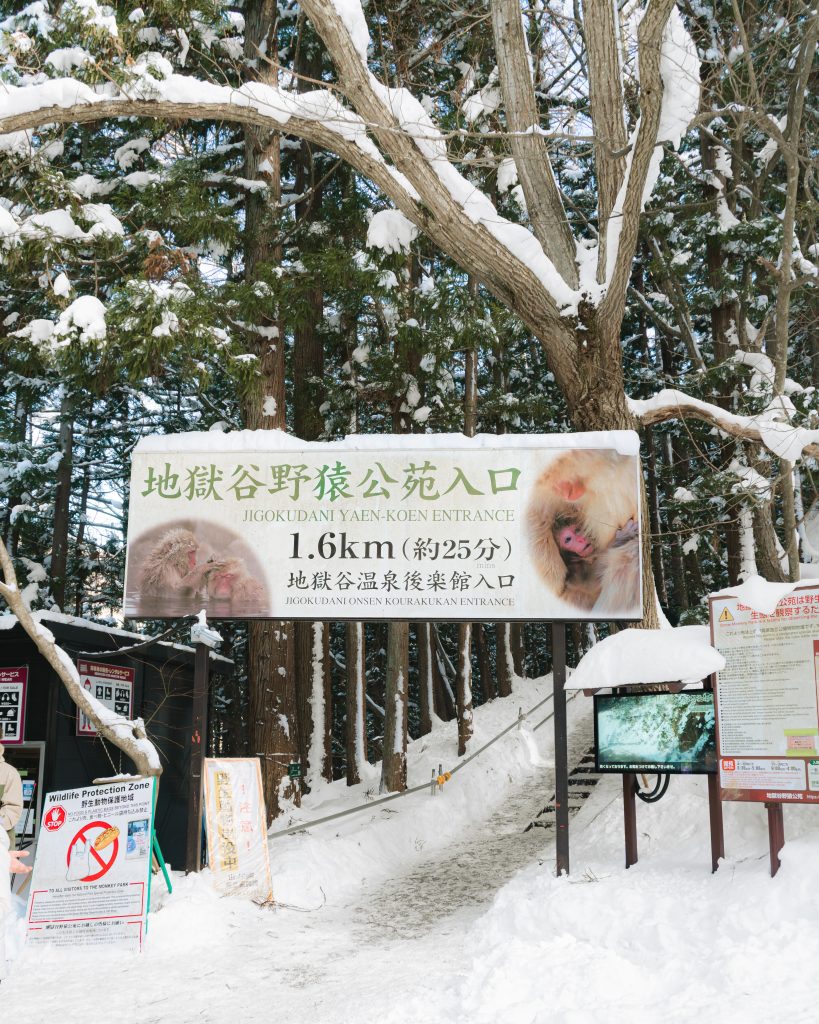
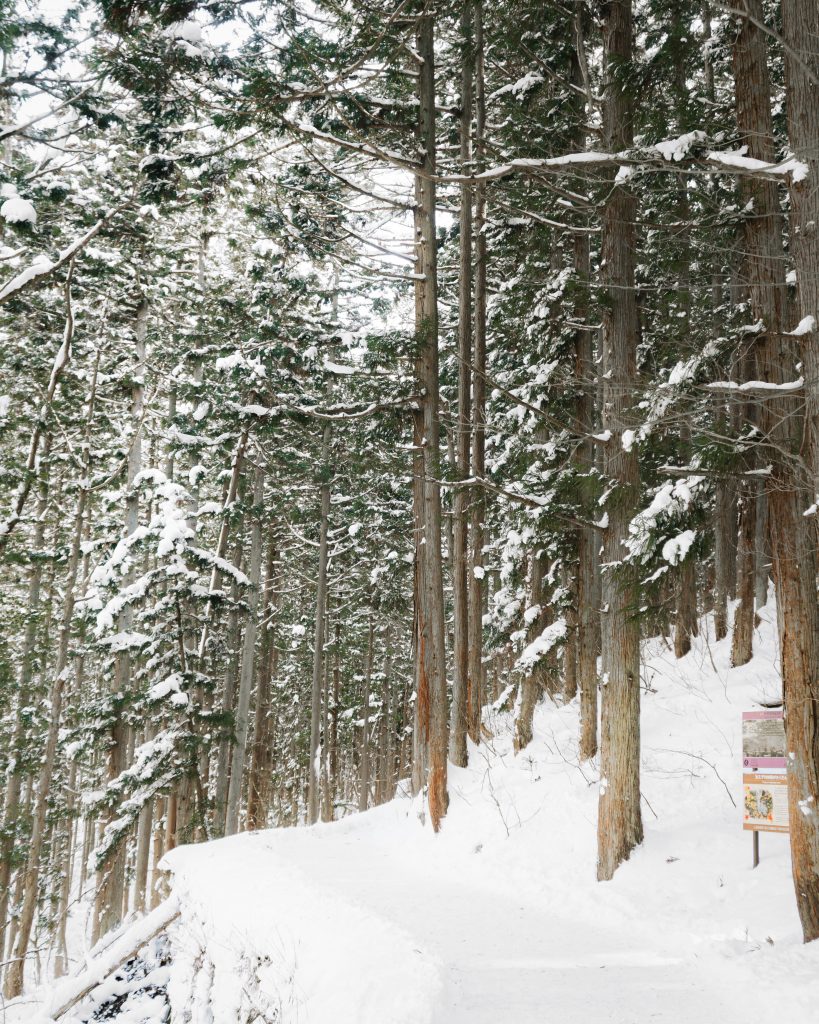
The trail to the park from the parking lot is officially 2.4 km (1.5 miles), which Google Maps estimates at around 40 minutes. But don’t panic. If you walk at a decent pace, it can be much quicker – it took me about 25 minutes.
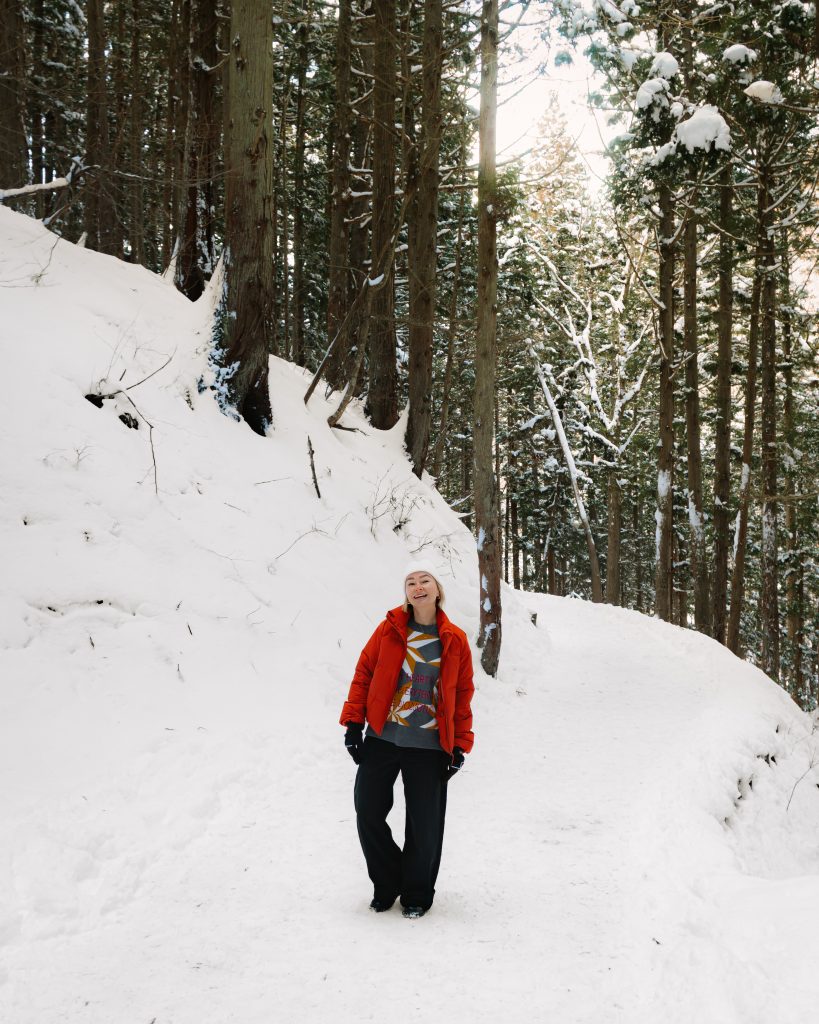
And honestly? It’s part of the experience. In winter, you’re walking through what feels like a snow-covered fairytale: a quiet forest path lined with tall Japanese cedar trees and snow crunching under your feet. I personally loved it.
That said, there are a few things to keep in mind:
- Wear proper shoes – the path can be snowy, slushy, or icy. Waterproof shoes with good grip are highly recommended;
- Dress warmly – it’s colder in the forest, and you’ll likely be standing around once you reach the monkeys;
- Allow enough time – don’t cut it too close if you’re trying to catch a return bus;
- Watch for slippery sections – even if it looks flat, some parts can be unexpectedly icy;
- don’t stray off the path – the slopes alongside are quite steep.
Important note!
There are crampon sellers at the start of the path. Of course, you can buy a pair if you want the extra grip, but unless you’re wearing… I don’t know… Converse or some other super smooth-soled shoes, you’ll be just fine without them.
Safety is important though! If you do end up testing gravity on the way to the monkeys, good travel insurance is a must! I use SafetyWing for my trips. Get covered before you go and travel stress-free.
I recommend SafetyWing

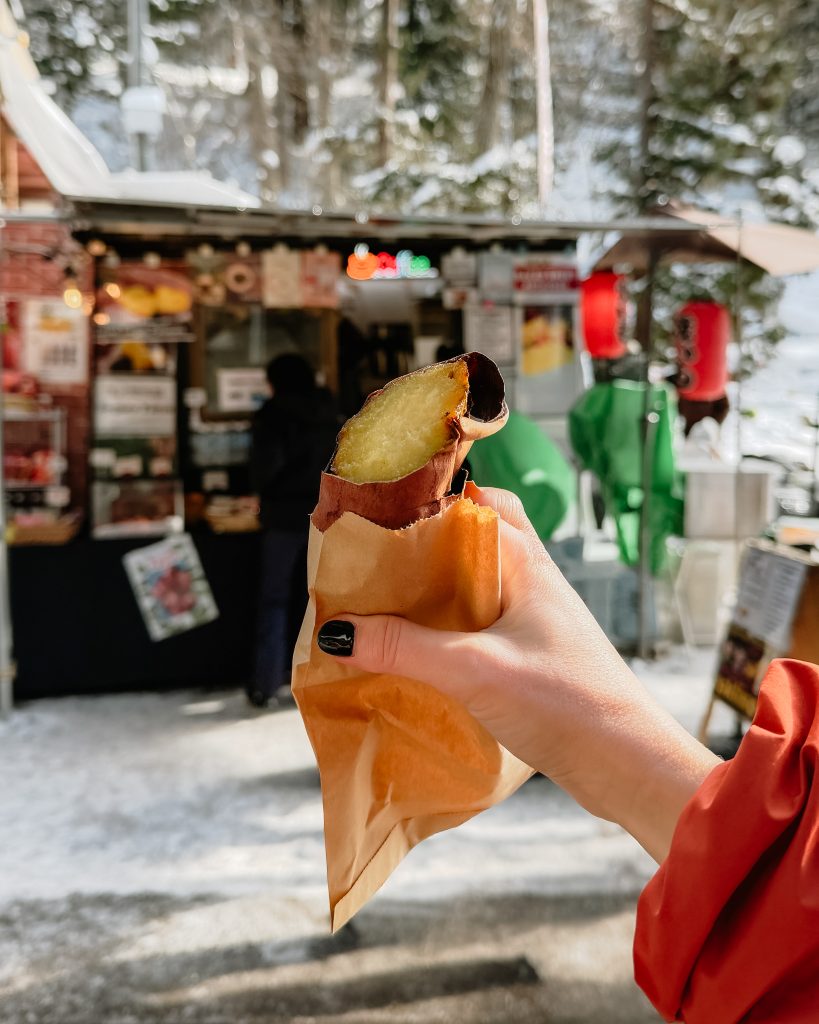
At the bottom of the trail, you’ll find a few cafés where you can warm up with a hot drink or grab something to eat. There’s also a cute little truck run by a very friendly lady selling roasted sweet potatoes — a classic Japanese winter snack. And I have to say, after that walk, it tasted absolutely incredible.
6. Is Snow Monkey Park crowded in the winter?
Winter is peak season at Snow Monkey Park, so yes – you should expect people. But “crowded” can mean different things.
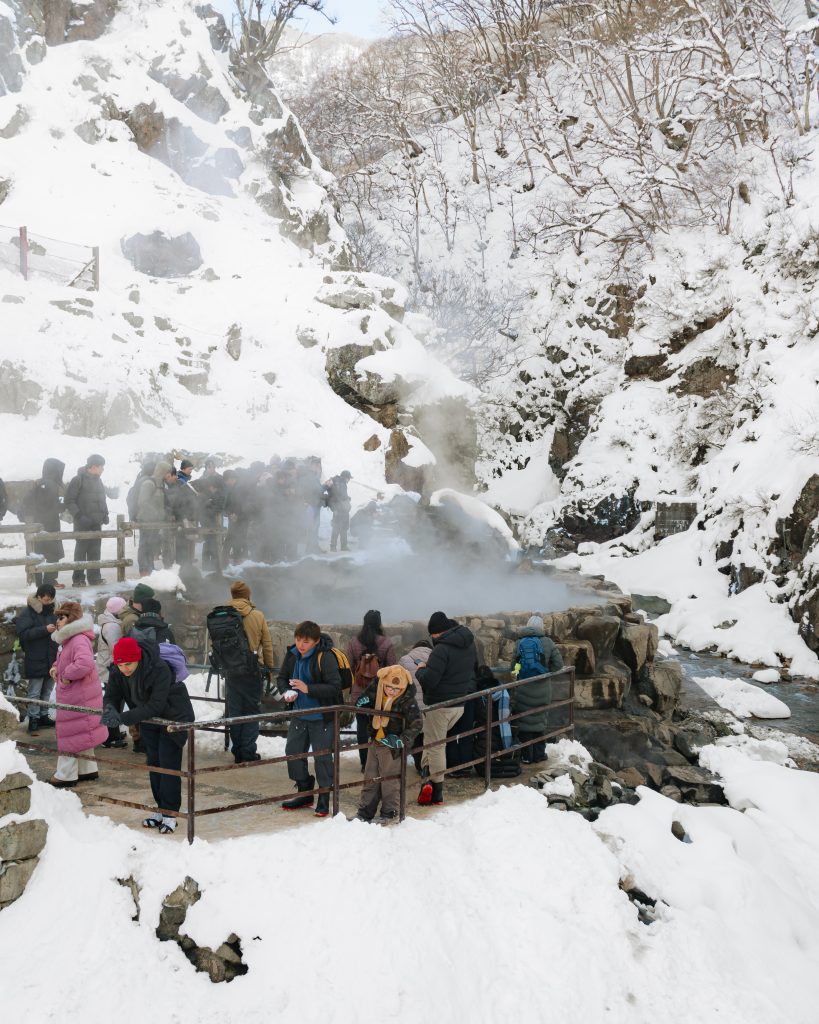
When I visited (a random Tuesday in January around noon), there were definitely visitors, but I wouldn’t call it overwhelming. The area around the hot springs – where the monkeys actually bathe – felt the busiest, mainly because it’s not a huge space. That’s where everyone gathers with their cameras. Still, I was able to watch the monkeys properly and take photos without feeling rushed or squeezed in. It never felt chaotic.
The forest path wasn’t rammed either. You could walk comfortably and at your own pace.
Of course, this was just my experience. Weekends, holidays or peak snowfall days might be a different story. But on a regular weekday in January? It was busy, yes, but absolutely manageable.
7. Will you actually see A monkey bathing in the hot springs?
Most likely, yes – especially in winter. That’s when your chances are highest, as the monkeys use the hot springs to warm up.
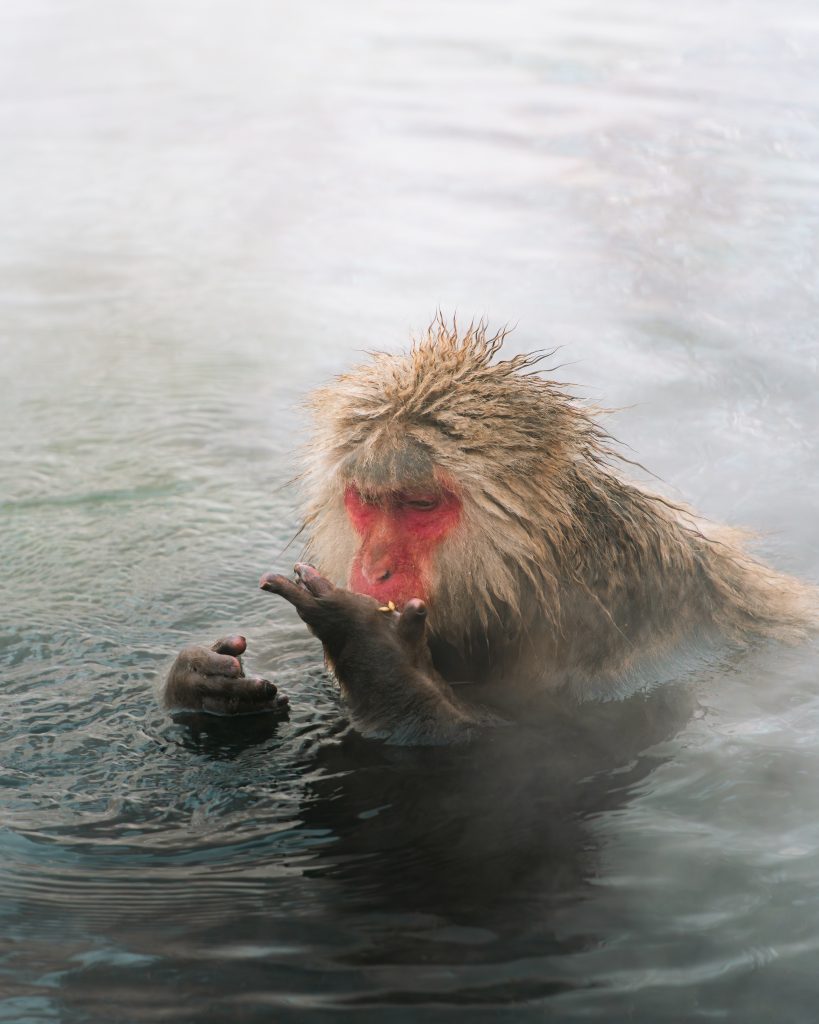
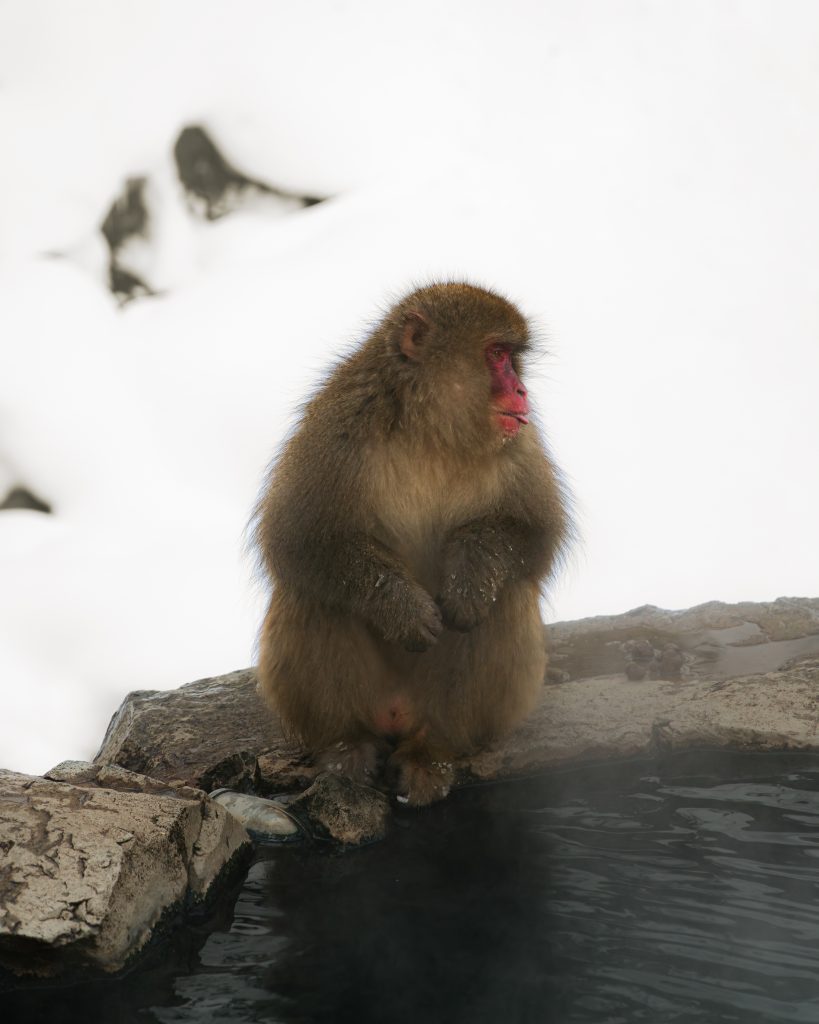
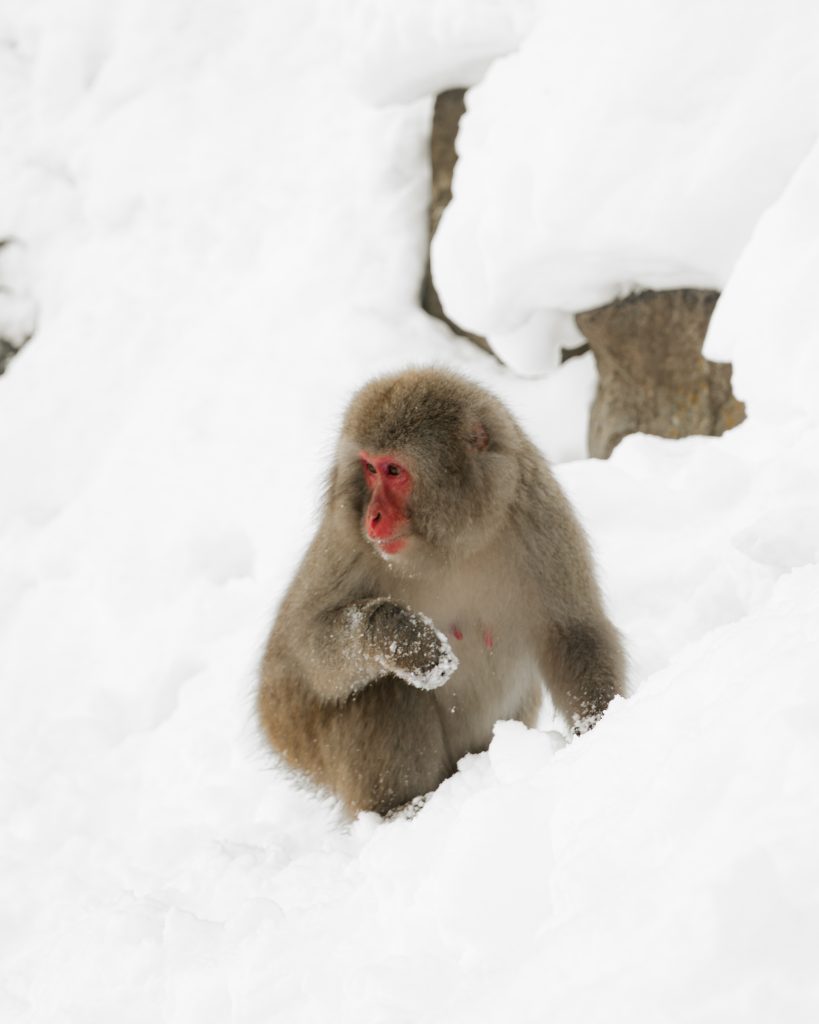
BUT don’t expect the entire troop to be soaking at once. When I visited, only two monkeys were actually bathing. The majority were walking around the springs, drinking water from the springs, digging for food in the snow or chasing one another like it was playground time.
That said, they’re still wild animals. Some will sit in the springs, some won’t. It depends on the temperature, the time of day and, well… their mood. But even if only a few are bathing, you’ll still get that iconic winter scene and plenty of entertaining monkey behaviour around it.
8. Is Snow Monkey Park Worth It?
Before going, I was honestly wondering the same thing.
Since I visited from Hakuba – even though the journey was smooth – it was still a long trip. It’s not something you just pop into for an hour. But in the end, I was super happy that I went. Seeing the monkeys in their natural habitat, wandering through the snowy forest, watching them dig in the snow and occasionally slip into the hot springs – it felt special. It was a great, slightly surreal winter experience.
So I can only speak for myself here, but yes, for me, it was absolutely worth it. And I’d do that “long-ish” journey again without hesitation. And if you care about seeing cheeky monkeys in the “almost” wild, I’d definitely recommend you do that trip too.
And we’re done!
I hope this guide on how to visit Snow Monkey Park helps you plan your trip with a bit more clarity and fewer logistical surprises. For me, it turned out to be a really special winter experience – peaceful, scenic and far more entertaining than I expected. I hope it will be the same for you.
Just remember – if you’re visiting in winter, dress properly, wear good shoes and give yourself enough time to enjoy the walk. And of course, behave – the only monkey business happening there should be strictly handled by the monkeys.
And if you’re heading to snowy Hakuba for some skiing, make sure to check out my Hakuba guide for first timers to help you plan the rest of your trip.
Hi, it’s Aga, the author of this blog. If you found this blog post interesting, entertaining or useful, please think of buying me a virtual coffee to support the site’s running costs. But if you know me, I might actually spend it on coffee. Thanks!
Pin for later!

Leave a Reply