* This is a guest post written by the team of Thai lessons by New
Thailand is one of the most popular and attractive travel destinations in the world. With its sunny beaches and vibrant cities, rich traditions, friendly and welcoming locals and delicious food, it’s a top-tier destination for many travellers. Beyond the landscapes and beaches, it’s Thailand’s culture and language that truly shape how you experience the country.

If traveling to Thailand in 2026 is on your bucket list, understanding a few basic Thai phrases and culture tips can improve your experience by 100%. There is no need to be fluent in the language to learn how to be polite, show respect and value the culture. Learning a few basic words is enough.
If you’d like to learn more about Thailand before you go, I’ve also put together a “Useful Things to Know Before Visiting Thailand” guide and “21 Facts About Thailand That Will Surprise You”.
Since Thai language and culture are closely connected, the Thai language and culture tips we’ll share below can help you avoid small misunderstandings and connect more genuinely with the locals.
Ready to learn? Let’s begin!
Thai language and culture tips that make trip to Thailand easier
Before we share the tips though, it’s worth touching briefly on the history of the Thai language. If you’ve ever wondered why Thai writing looks so unusual, it’s because the language was influenced by Pali and Sanskrit. These ancient languages shaped Thai’s structure and sound, which is why it looks and feels so different from most languages.

It’s also worth knowing, that Thai a tonal language. This means the same word can have different meanings depending on its pronunciation. The language has five tones and learning them might take some time, but effort always matters more than accuracy.
I personally first noticed this during my first days in Bangkok, when I was trying to buy a BTS ticket to my station: Sanam Pao. I pronounced it very flat, the way you would in many Western languages, and the ticket seller simply couldn’t understand me. It wasn’t until I added an accent to “Pao” and made it a bit more melodic that it suddenly clicked. That moment made me realise just how important tone and rhythm are in Thai – even when you’re saying something as simple as a place name.
That’s why it’s so useful to learn Thai from locals who understand the challenges foreigners actually face. For this reason, platforms like Thai Lessons by New have become popular starting points for travellers looking for a friendly, practical introduction to the language.

So yes…
1. Learning a little Thai matters
Even though English is spoken in popular tourist areas, relying only on English can limit your experience. Speaking even a few words of Thai shows respect for the culture and often leads to warmer, more genuine interactions with locals. It helps you connect with the country and the people around you on a deeper level. And the best part is, Thais are usually genuinely happy and excited when you try to speak even a little Thai.
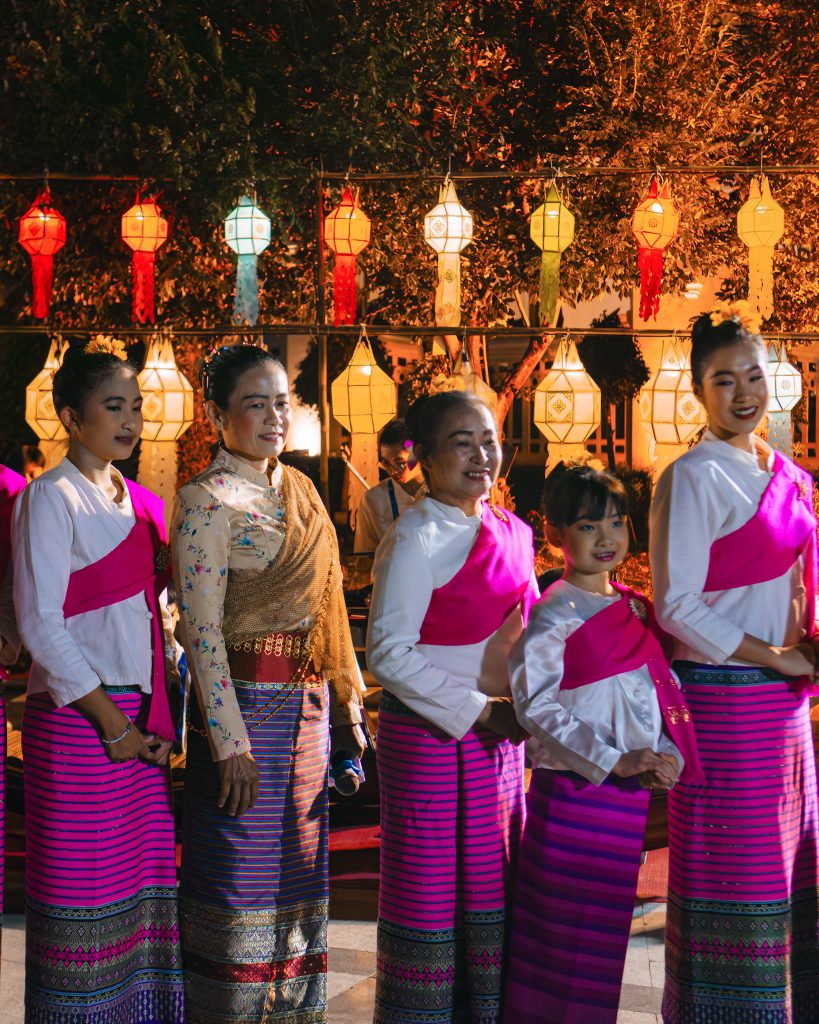
A simple สวัสดีค่ะ (sà-wàt-dee kâ) if you’re a female speaker, or สวัสดีครับ (sà-wàt-dee khráp) if you’re a male speaker, is the most common way to say “hello” in Thai and can turn a basic transaction or everyday interaction into a friendly exchange.
To make your life a bit easier: สวัสดี (sà-wàt-dee) works at any time of day! So you don’t need to remember different words for morning, afternoon or evening.
Saying “hello” in Thai is a small effort you make as a visitor, but locals genuinely appreciate it, especially when you’re in places that aren’t very touristy.
2. Avoiding miscommunications
Yes can mean no
First thing you need to realize is, that Thai language has an indirect communication style. People don’t always mean exactly what they say. Sometimes, messages need more context and body language clues to be understood. For instance, a polite smile or a “yes” don’t always mean you fully agree. Sometimes it’s just a way to avoid conflict or awkwardness.

Greng jai
It’s also useful to know, Thai culture values เกรงใจ (greng jai), which roughly means being considerate and not wanting to inconvenience others. Keeping this concept in mind can really help you understand certain reactions and avoid misunderstandings. For example, if you visit someone’s home in Thailand and they invite you to stay for a meal, it’s often said out of courtesy rather than with a strong expectation that you’ll accept. A polite Thai guest would usually decline to show เกรงใจ (greng jai), while an English speaker might say yes without a second thought. In English-speaking cultures, when someone says “stay for dinner,” they usually mean it quite literally.
Have you eaten
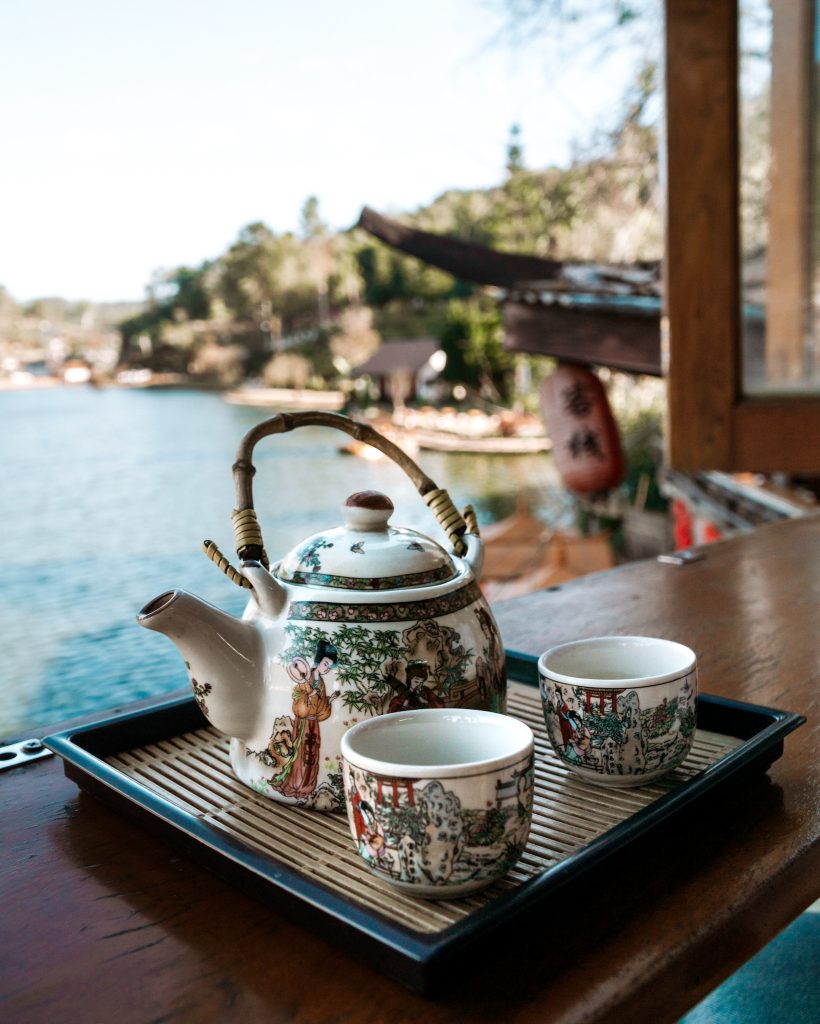
Another common miscommunication (my personal favourite) is that Thai people often ask, “Have you eaten?” as a way of saying, “How are you?”. It’s usually, not a question about food, but rather a caring and friendly greeting.
And I can say from experience that it’s very real. My Thai friends would often ask me – in English – whether I had already eaten. At first, I found it a bit strange, like everyone was oddly obsessed with food. It wasn’t until later that I realised it’s simply a common phrase in Thai, used in the same way as asking “how are you?”
Well, that just reflects the importance of food, and caring about well-being of others that is common in Thai culture.
3. Keeping in mind cultural etiquette
Patience and staying calm
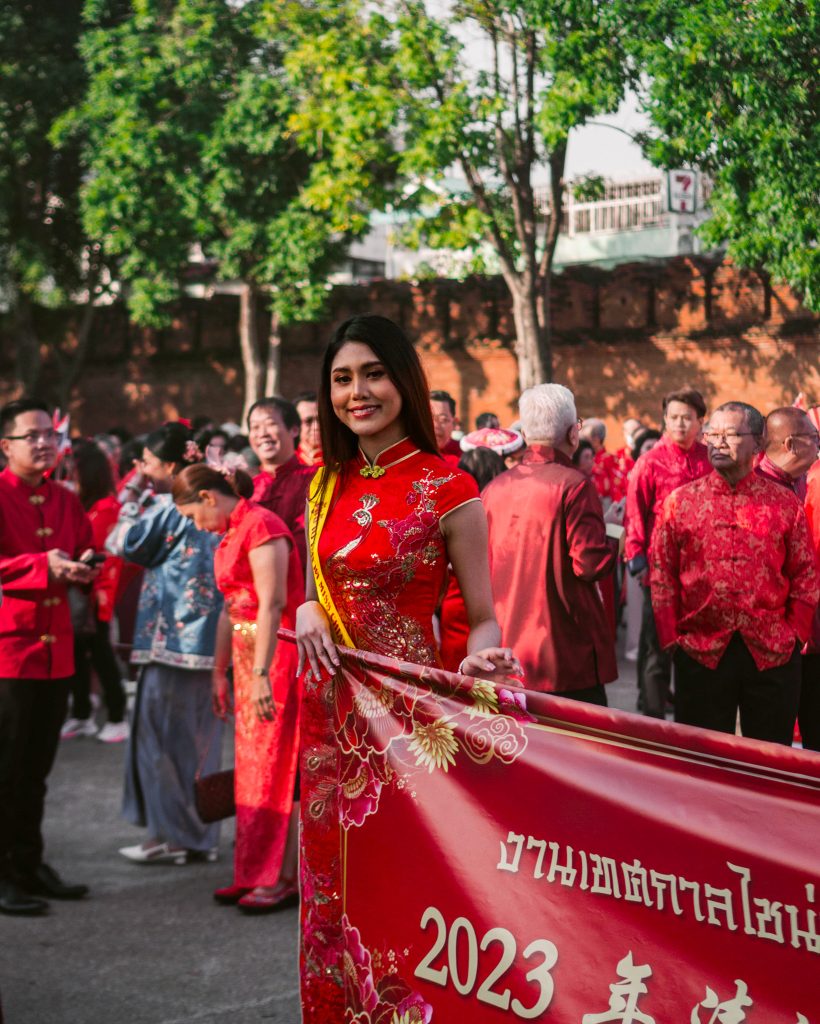
In Thai culture, respect and politeness always come first. Thai people appreciate speaking calmly, smiling and being patient, and they are not fans of confrontation. If you ever get yourself into a bad situation or something goes wrong, staying calm is your best bet for solving the problem. Showing frustration can make locals uncomfortable.
Oh yes, I could recall plenty of examples of both patience and staying calm when things go wrong. But there’s one situation I’ll always remember: my coach trip from Krabi to Bangkok. Normally, this journey takes around 13 hours – which is already long enough. Mine took… 25 hours. Yes, I spent 25 hours on a coach.
The delay was caused by flooding along the way. Instead of taking an alternative route, the driver decided it was better to wait it out, which meant we stayed in the same place for about eight hours. While the Thai passengers on the bus remained completely calm, I – a hot-blooded European – was fuming, swearing and asking the bus staff when we can finally move.
That experience taught me very quickly that patience and calm are key when dealing with just about anything in Thailand.
And no, this wasn’t that amazing coach I wrote about in my other blog post. If you’re curious what I’m talking about and want to learn how to book the most comfortable bus trip you can have in Thailand – make sure to check it out.
But ok, back to the cultural tips.
The wai
One very important gesture to know about as a foreigner is the wai (ไหว้). This is a traditional Thai greeting in which the palms are pressed together and a slight bow is made. Locals don’t expect outsiders to use it perfectly, but understanding its meaning shows cultural awareness. As a foreigner, you don’t need to initiate a wai, but returning one is highly appreciated.
No shoes or head touching
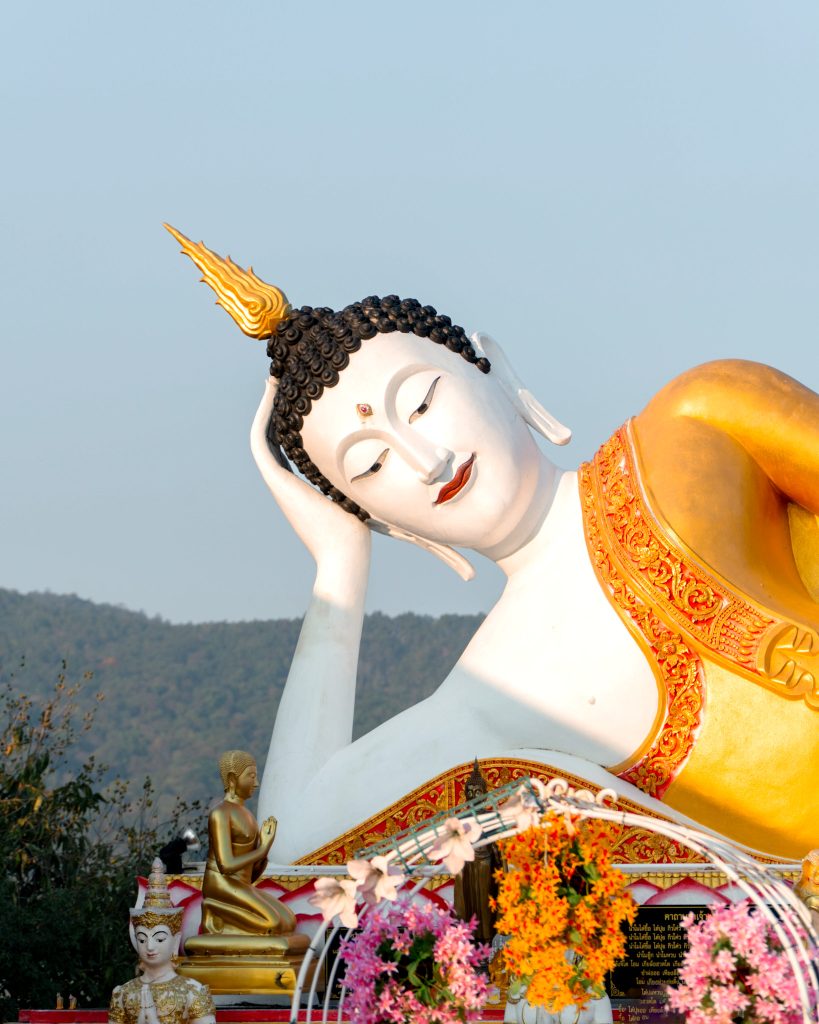
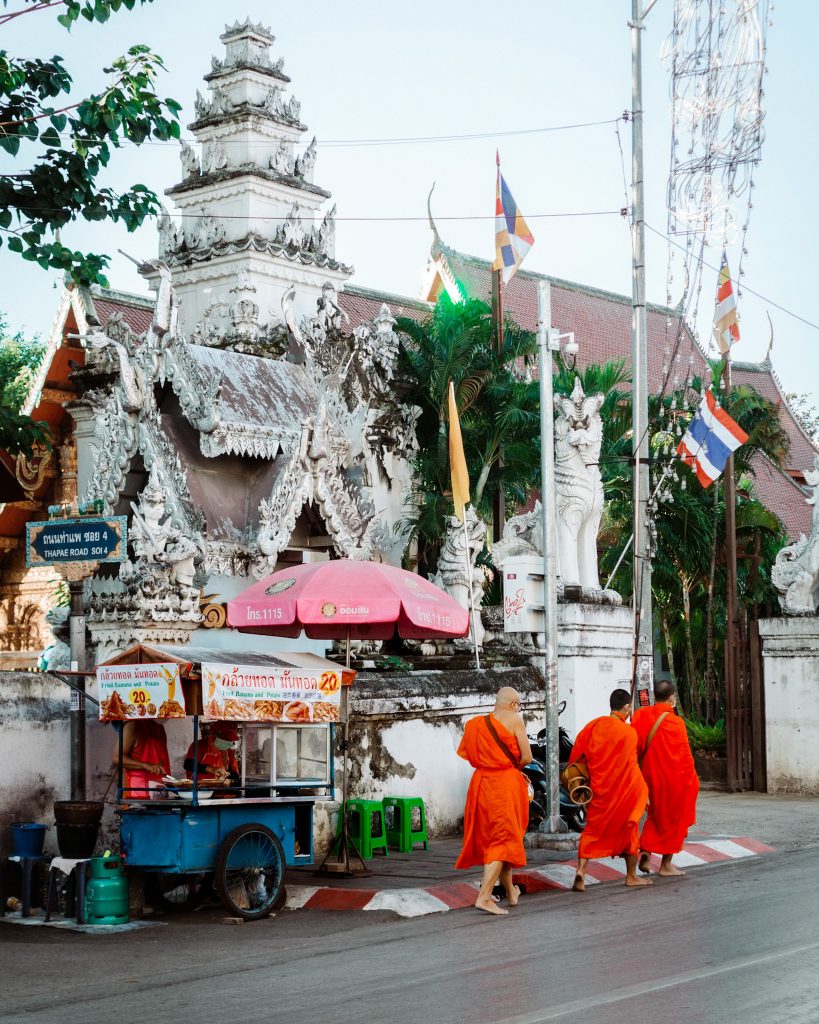
Another very useful cultural tip is always removing your shoes when entering temples, homes and sometimes even small shops. When you are not sure if it’s appropriate, look around to see if shoes are left outside and just follow the lead. Also, avoid touching other people’s heads or pointing toes, as these are considered sacred and can be disrespectful.
Now that we’ve covered some general Thai language and culture tips, it’s time to get practical and start learning some Thai.
Important Thai phrases you should know
These basic phrases will help you get through everyday situations more easily and show that you’re making an effort to understand the culture.
สวัสดี (sà-wàt-dee) – hello, goodbye
ขอบคุณ (kòp kun) – thank you
ขอโทษ (kŏr tôht) – excuse me, sorry
เท่าไร (tâo-rài?) – how much is it?
ไม่เผ็ด (mâi pèt) – not spicy
ช่วยด้วย (chûuay dûuay) – help
One small but important detail is adding a polite ending – ค่ะ (kâ) if you’re female, and ครับ (khráp) if you’re male. It instantly makes your Thai sound more respectful and natural, and it’s a small habit that really makes a big difference.
Got it? Nice!
I hope these Thai language and culture tips will be helpful during your next trip to Thailand. Even small things – like knowing a few words, understanding social cues or recognizing why people act the way they do, can completely change how you experience the country. They can help you feel more confident, connect more easily with locals, and ultimately enjoy your time in Thailand on a much deeper level.
And if learning Thai is part of your travel plan, watching Thai Lesson By New content on YouTube and Instagram can be a great place to start before you jump on the plane to your dream destination.
Who’s New?
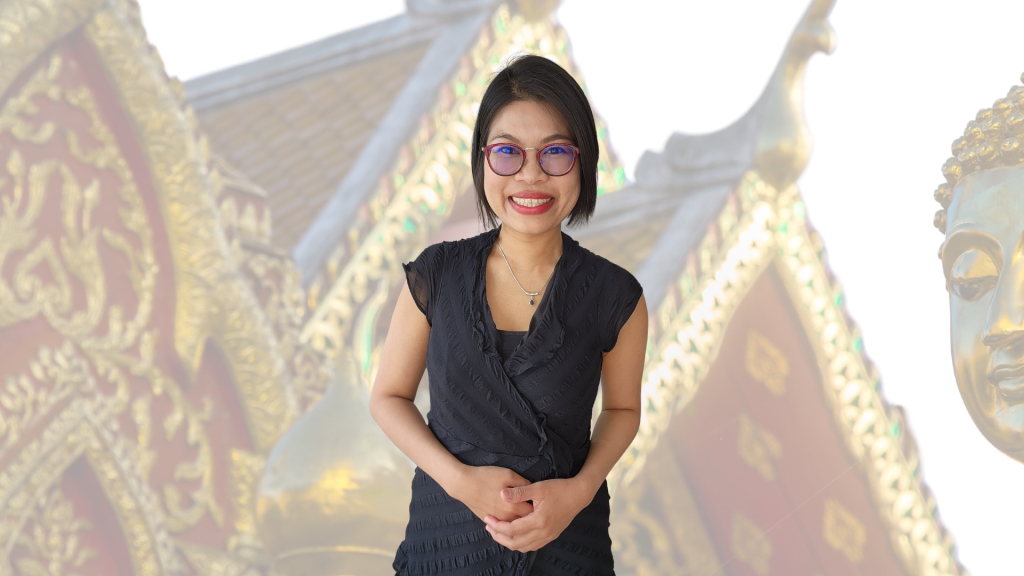
Before starting her journey online, Wasinee, also known as New, built a strong foundation in Thai communication. From a young age, she stood out as a talented public speaker, leading her school’s Thai debate team and winning awards in public speaking. Her passion for language and clear communication developed into a teaching career. Five years ago, she decided to share her expertise online and created her YouTube channel – Thai Lessons By New. Since then, Wasinee has produced over 400 video lessons, covering everything from tones and pronunciation to cultural etiquette and keeps an active presence online with daily Instagram content. With a combined audience of 145K across different social media platforms, New has built a thriving community beyond grammar and vocabulary.
Website: https://www.thaibynew.com/homepage
Instagram: https://www.instagram.com/thai_lessons_by_new/
Happy learning!




Leave a Reply